
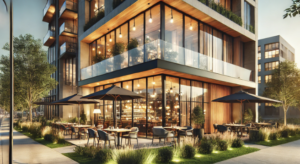
A restaurant can run on heart, hustle, and a killer menu, but the building still sets the ceiling on what the business can become. When the space was never designed for the concept, or it was designed for a different era of dining, it quietly steals profit through bottlenecks, costly repairs, staffing headaches, and guest experience compromises. New construction is not only about having something shiny and new. It is about building a restaurant that is intentionally engineered to sell more, serve faster, keep quality consistent, protect the brand, and scale with demand. ✨
The restaurant industry continues to evolve, and operators are still pushing for growth and new locations even with headwinds. New construction is one of the clearest ways to create an environment that matches how guests actually order, how food actually moves, and how teams actually work.
A purpose-built layout creates speed, consistency, and calmer shifts
In many restaurants, the largest problems are not food problems. They are flow problems. A tight expo line, awkward server paths, undersized dish area, poorly placed cold storage, or a pickup zone wedged into the host stand can turn a normal rush into a daily fire drill. New construction allows the entire back-of-house and front-of-house choreography to be designed as one system, not patched together over years.
Modern restaurant design is increasingly focused on smaller footprints, efficient circulation, and intentional zoning that supports the brand’s service style. A compact, well-planned design can outperform a bigger, poorly planned box because it reduces steps, reduces mistakes, and increases throughput. When the building supports the team’s movement, the team can focus on hospitality instead of survival. 🍽️
New construction aligns the space with how customers buy today
Restaurants no longer sell meals only at tables. Guests buy through mobile ordering, delivery platforms, kiosks, online catering, pickup shelves, drive-thru lanes, and loyalty apps. That shift is not a trend. It is a structural change in how revenue arrives. A building designed decades ago often forces owners to squeeze modern channels into corners, which can dilute the dine-in experience while still failing the off-premise customer.
New construction makes it easier to design for multiple revenue streams without chaos. Dedicated pickup entrances, separate staging and warming zones, a catering load-in, and a clean handoff line for delivery drivers can protect dining room energy while increasing volume capacity. Industry coverage has highlighted how chains and concepts have introduced new prototypes to match these behaviors.
A new build protects the brand by delivering an intentional guest experience
Guests do not experience your business in a spreadsheet. They experience it in a few seconds: the parking, the entrance, the lighting, the noise level, the wait zone, the restrooms, the seating comfort, the pickup flow, and the pace of service. When a restaurant operates inside a space that does not match the brand, the brand feels inconsistent even if the food is excellent.
New construction lets the restaurant create a signature experience, from sightlines and acoustics to how the guest transitions from arrival to ordering to dining to departure. It also helps support modern hospitality expectations, which increasingly emphasize human connection and experience alongside technology. A thoughtfully built space reduces friction, and reduced friction feels like quality. 🌿
It can be the most practical path to safety, code compliance, and risk reduction
Older buildings can carry hidden costs that do not show up until they show up hard: aging electrical, inadequate ventilation, plumbing constraints, grease management issues, water intrusion, uneven floors, outdated fire suppression, and accessibility limitations. Retrofitting can be expensive, slow, and unpredictable. New construction allows a restaurant to meet current codes from day one and incorporate safety and durability into the plan rather than chasing repairs.
A new build can also incorporate modern kitchen ventilation, grease containment strategies, and fire protection systems in a way that supports both safety and operational performance. It reduces the surprise factor that so often derails remodel timelines and budgets. 🧯
New construction can lower long-term operating costs through smarter systems
Restaurants live and die by margins, and buildings influence margins every day. Energy use, HVAC performance, water efficiency, insulation, equipment placement, and maintenance access all have recurring financial impact. New construction makes it possible to invest in systems that reduce waste and increase reliability, including efficient HVAC zoning, better insulation, durable finishes, and kitchen layouts that reduce heat load and labor strain.
Industry analysis has pointed out how restaurant construction rebounded with modernization campaigns and competition for prime real estate, highlighting that many operators are investing to keep facilities aligned with current realities. New construction can be a strategic move to stabilize costs and avoid the drip-drip-drip of constant patchwork spending. 💰
It supports growth by building for future capacity, not just today’s demand
If a restaurant is winning, it needs a building that can keep up. That might mean capacity for higher volume, additional prep space, larger cold storage, an expanded bar program, a bigger catering operation, or a more efficient drive-thru. Growth also means staffing, and staffing means space: training areas, secure storage, comfortable break zones, and workstations designed to reduce strain and turnover.
The National Restaurant Association’s industry reporting and data resources underline how large and economically significant the industry is, which reinforces why smart operators treat facilities as a business asset, not an afterthought. When a restaurant is built to scale, it can pursue new opportunities without breaking under the weight of its own success. 🚀
New construction can unlock better locations and better deal structures
Sometimes the reason to build is not the building, it is the land. New construction can open the door to higher-traffic corridors, revitalized retail centers, and areas where the concept fits the demographic and the demand. It can also align with development incentives, tenant improvement structures, and long-term lease strategies that improve the business’s stability.
Recent restaurant coverage continues to show brands expanding and building into new markets and new developments, reflecting the ongoing importance of location strategy and modern facilities.
Restaurant industry and restaurant news insights
Here are six one-time authority links connected to restaurants and restaurant industry coverage, including one Wikipedia source:
Conclusion: new construction is a business decision that shows up in every shift ✅
New construction is not only about aesthetics. It is about designing a restaurant that runs cleaner, faster, safer, and more profitably. It is about a space that supports the menu, the team, the guest journey, and the revenue channels that matter now. A purpose-built restaurant reduces daily friction, protects the brand, and creates a foundation that can grow with demand instead of fighting it. When the building finally matches the business, the restaurant gets to perform at the level the concept deserved all along. 🌟