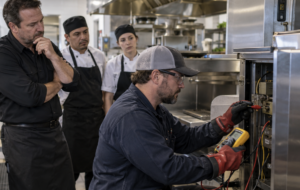
Dallas Restaurant Owners: 7 Management Lessons from the Healthcare Industry 🍽️

Restaurant News for Dallas Healthcare Management Consulting

Dallas has built one of the most varied and competitive restaurant scenes in Texas. From neighborhood institutions and independent chef-driven concepts to luxury dining rooms and rapidly expanding restaurant groups, the city gives diners an enormous range of choices. Coverage from the Dallas Morning News Restaurant News section, Eater Dallas, and other local publications shows just how quickly restaurants open, expand, reinvent themselves, and sometimes disappear.

That kind of competition puts enormous pressure on restaurant owners. Great food is essential, but food alone rarely determines whether a restaurant develops a loyal following and survives for years. Staffing, communication, purchasing, training, customer service, safety, financial controls, facilities, and leadership all affect the experience delivered to every guest.

Healthcare organizations operate in a very different environment, but their managers face many of the same fundamental challenges. Hospitals, medical groups, clinics, and healthcare facilities must coordinate people, processes, supplies, technology, buildings, and customer experiences while maintaining consistency under pressure.

For Dallas restaurant owners, several healthcare management practices offer valuable lessons that can be applied directly to hospitality.

1. Build Repeatable Systems Instead of Depending on Individual Employees

Healthcare organizations cannot depend entirely on one exceptional employee remembering how everything should be done. Procedures must continue working when employees change shifts, managers take vacations, or new people join the organization.

Restaurants benefit from the same approach.

A restaurant that operates primarily through verbal instructions and institutional memory becomes vulnerable whenever an experienced manager, chef, bartender, or server leaves. Knowledge walks out the door with the employee.

Strong restaurant operators document their systems.

Opening procedures, closing procedures, food preparation standards, cleaning responsibilities, inventory practices, reservation handling, customer complaints, vendor deliveries, employee onboarding, equipment inspections, and emergency procedures can all be documented in simple operating guidelines.

Documentation does not mean turning a restaurant into a rigid corporate environment. It provides employees with a reliable baseline.

Dallas diners have more options than ever. The D Magazine Dallas dining coverage regularly highlights established restaurants alongside new concepts entering the market. In an environment with that much competition, consistency becomes part of a restaurant’s reputation.

A guest who receives excellent service on Friday and poor service the following Saturday does not experience the restaurant as two different shifts. The guest experiences one brand.

Repeatable systems make consistent experiences possible.

2. Treat Communication as an Operational System 📋

Healthcare teams frequently operate across departments. Physicians, nurses, administrators, technicians, pharmacists, facilities personnel, and other specialists may all contribute to a single patient’s experience.

Restaurants operate through similar coordination.

A guest may interact with a host, server, bartender, kitchen team, food runner, busser, manager, valet, and reservation system during one visit. A breakdown between any two of those points can affect the entire experience.

Restaurant communication therefore needs structure.

Pre-shift meetings can cover reservations, large parties, menu changes, unavailable items, staffing concerns, VIP guests, special events, and service priorities. Post-shift notes can capture problems before the next team encounters them.

Managers can also establish clear methods for reporting equipment problems, supply shortages, customer complaints, scheduling issues, and maintenance needs.

Small communication failures often become expensive operational problems.

A broken refrigerator seal that is never reported can become a repair. A recurring customer complaint that never reaches ownership can become a reputation problem. An inventory shortage that the kitchen discovers during dinner service can become lost sales.

Clear communication gives management an opportunity to solve problems while they are still small.

3. Make Safety Part of the Culture, Not Just a Checklist

Safety is deeply embedded in healthcare management because the consequences of mistakes can be serious. Restaurants also operate in environments where safety must remain a daily priority.

Hot surfaces, sharp tools, wet floors, heavy equipment, food storage requirements, electrical systems, refrigeration, cleaning products, and crowded work areas all create risk.

The strongest operators do more than complete required inspections. They create a culture in which employees are expected to report hazards immediately.

That means employees should feel comfortable reporting a leaking pipe, malfunctioning appliance, damaged electrical outlet, unstable shelving unit, refrigeration problem, or unsafe work area without assuming someone else will eventually handle it.

Dallas restaurant operators can also benefit from staying connected with organizations serving the local hospitality industry. The Greater Dallas Chapter of the Texas Restaurant Association provides industry resources, events, education, and information relevant to restaurant businesses throughout the region.

Safety protects employees and customers, but it also protects business continuity.

A preventable accident or neglected maintenance issue can become far more expensive than addressing a problem when it first appears.

4. Measure the Operation Before Making Major Decisions 📊

Healthcare administrators rely heavily on performance information. Restaurant owners should do the same.

Revenue is important, but revenue alone does not explain the health of a restaurant.

Owners should understand food costs, labor costs, table turnover, average check size, menu profitability, reservation patterns, waste, overtime, customer complaints, repeat business, delivery performance, and purchasing trends.

The purpose is not to create endless spreadsheets. The purpose is to identify patterns.

A restaurant may appear busy while losing margin on several popular dishes. Another may have strong weekend revenue but excessive weekday labor. A third may discover that reservations are increasing while repeat visits are declining.

Good information gives owners the ability to act before a trend becomes a crisis.

Dallas restaurant news illustrates how dynamic the local marketplace has become. The Dallas Observer restaurant section regularly reports openings, closings, expansions, anniversaries, concept changes, and emerging dining trends across North Texas.

That constant movement makes disciplined management especially important.

Restaurant owners cannot control every economic or competitive factor around them, but they can understand their own operation in detail.

5. Design the Customer Experience From Beginning to End

Healthcare organizations increasingly examine the entire patient journey rather than focusing exclusively on the clinical interaction. Restaurants can benefit from examining the complete guest journey in the same way.

The dining experience begins before the customer enters the restaurant.

It may start with a Google search, restaurant review, social media post, recommendation, news article, reservation page, or website visit.

Then come parking, arrival, greeting, seating, menu presentation, ordering, food delivery, table maintenance, payment, departure, and follow-up.

Every stage contributes to the customer’s perception of the restaurant.

Dallas has developed a dining identity that extends far beyond traditional Texas barbecue and steakhouses. Visit Dallas Food & Drink highlights the city’s broad mix of cuisines, neighborhoods, restaurants, food trucks, bars, and culinary experiences.

That variety creates opportunity, but it also raises expectations.

Restaurant owners should periodically experience their businesses from the perspective of a first-time guest. Reservation instructions, signage, lighting, music, seating, restrooms, menu readability, service timing, payment systems, and departure procedures all contribute to the overall impression.

Excellent hospitality is rarely one dramatic gesture. It is usually the result of dozens of small details working together.

6. Plan for Problems Before They Happen

Healthcare organizations devote considerable attention to contingency planning because managers know that unexpected situations are inevitable.

Restaurant owners face their own version of operational uncertainty.

A refrigeration unit fails before dinner. A key employee calls out. A vendor misses a delivery. The point-of-sale system goes offline. A water leak appears. A storm affects reservations. A large party arrives early. A chef leaves unexpectedly.

The time to decide how the business will respond is not always during the emergency.

Owners can identify the most likely disruptions and establish basic contingency plans.

Managers should know which vendors provide emergency service, who has authority to approve repairs, where important account information is stored, which employees can cover critical positions, how customers will be contacted during unexpected closures, and what alternative suppliers are available.

The principle is simple. Preparation creates options.

The long history of Dallas dining provides plenty of examples of restaurants that have adapted through changing neighborhoods, customer preferences, competition, and economic cycles. Even the Wikipedia list of notable Dallas restaurants includes businesses representing multiple eras of the city’s restaurant history.

Longevity generally requires more than a popular menu. It requires the ability to adapt.

7. Use Specialists When the Business Becomes Too Complex for One Owner

Healthcare organizations routinely rely on specialists because no single executive can reasonably possess deep expertise in every area of a complicated operation.

Restaurant owners sometimes struggle with this concept.

Many successful restaurants begin with entrepreneurial owners who handle nearly everything themselves. That approach may work when the company is small. It becomes increasingly difficult as the business grows.

Expansion can introduce construction, leases, permitting, technology, financing, purchasing, human resources, facilities, marketing, legal considerations, and multiple layers of management.

At some point, trying to personally control every specialty can actually reduce an owner’s ability to manage the business.

The healthcare industry offers a useful model. Leaders establish objectives and then bring in people with specialized expertise to manage complicated parts of the organization.

The same principle applies outside healthcare. Businesses dealing with complex facilities, construction programs, operational changes, or major investments often rely on specialized advisers to represent ownership interests and coordinate projects. This type of disciplined oversight is also relevant when examining services associated with Dallas Healthcare Management Consulting.

Restaurant owners do not need an outside consultant for every decision. They do need to recognize when specialized expertise can prevent an expensive mistake.

An experienced restaurant owner understands food and hospitality. That expertise does not automatically make the owner an architect, construction manager, accountant, employment attorney, technology specialist, engineer, or commercial real estate expert.

Strong leadership includes knowing when another professional should be at the table.

Management Lessons That Extend Beyond Healthcare

The most useful lesson Dallas restaurant owners can take from healthcare management is not a particular procedure. It is a way of thinking.

Complex organizations perform better when responsibilities are clear, systems are documented, information is shared, risks are identified, results are measured, and leadership remains focused on the complete customer experience.

Restaurants may appear simple from the dining room. Behind the scenes, they are extraordinarily complicated businesses.

Inventory arrives constantly. Employees rotate through shifts. Equipment operates for long hours. Customers expect consistency. Online reviews travel quickly. Food costs change. Labor challenges develop. Facilities age. Competitors enter the market.

Managing all of those variables requires more than reacting to whatever happens each day.

It requires systems.

Conclusion 🍽️

Dallas restaurants are part of a dining market that continues to evolve. Publications such as Eater Dallas, the Dallas Morning News, D Magazine, the Dallas Observer, and Visit Dallas continually document new openings, established favorites, expansions, closures, awards, and changing dining trends across the region.

For restaurant owners, that constant activity is a reminder that success cannot depend entirely on a great opening, a talented chef, or a popular menu.

The strongest operations are built behind the scenes.

Healthcare management provides a useful framework for restaurant leadership because both industries depend on people, communication, safety, facilities, customer experience, technology, and disciplined operations. Restaurant owners who document their systems, improve communication, measure performance, prepare for disruptions, protect the guest experience, maintain a strong safety culture, and bring in specialists when necessary create businesses that are better prepared for long-term growth.

Dallas diners may never see those management systems.

They will experience the results every time they walk through the door.

Why Gloss Cabinets Are Becoming a Major Restaurant Design Trend

Restaurant News for Gloss cabinets

Restaurant design has moved far beyond choosing tables, chairs, lighting, and wall colors. Today’s dining spaces are expected to create an experience before the first plate reaches the table. Guests notice the entrance, the bar, open-kitchen details, service stations, cabinetry, lighting, and even the way surfaces reflect the room around them. As restaurants compete for attention both in person and online, every design decision has become part of the brand.

One material choice gaining momentum in contemporary restaurant interiors is high-gloss cabinetry. Sleek finishes, clean lines, dramatic reflections, and strong visual contrast are making Gloss cabinets increasingly attractive for restaurants that want a polished, modern appearance. From upscale hotel restaurants and cocktail lounges to fast-casual concepts and chef-driven dining rooms, glossy cabinetry can help create interiors that look intentional, current, and memorable. ✨

The trend also reflects larger changes taking place throughout hospitality. Restaurants and hotels are increasingly treating design as an important part of the guest experience rather than simple decoration. According to Wikipedia’s overview of hotel design, contemporary hospitality design brings together aesthetics, functionality, guest needs, engineering, interior planning, and operational considerations. Restaurants are applying many of those same principles as they create spaces designed to work efficiently while making a strong visual impression.

Restaurant Design Has Become Part of the Dining Experience

A restaurant meal is no longer judged only by what arrives on the plate. The surroundings influence how guests perceive the entire experience. Lighting, color, texture, acoustics, furniture, fixtures, and cabinetry all contribute to the atmosphere people associate with a restaurant.

This is especially noticeable in restaurants connected to hotels and resorts. Hotel Management has reported on the growing emphasis on designing hotel restaurants to appeal to local diners rather than treating them solely as amenities for overnight guests. That shift puts greater pressure on restaurant interiors to establish their own identity.

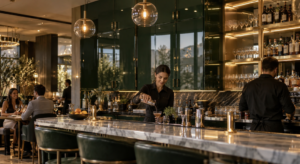
Glossy cabinetry fits naturally into this environment because it immediately produces a finished, sophisticated appearance. Under carefully planned lighting, polished cabinet surfaces reflect highlights throughout the room and can make bars, host stations, private dining areas, and open kitchens feel more refined.

In a competitive dining market, those details matter. A restaurant has only a brief opportunity to make an initial impression when someone walks through the door. A cohesive interior can reinforce the idea that the same level of attention given to the dining room has also been given to the menu, service, and overall operation.

Gloss Finishes Create a Modern Luxury Look

Luxury restaurant design does not always depend on elaborate ornamentation. Many contemporary spaces create a premium feeling by using fewer materials more deliberately. Smooth cabinetry, stone counters, architectural lighting, metal details, natural wood, glass, and carefully selected furnishings can create an environment that feels expensive without becoming visually overwhelming.

High-gloss cabinet surfaces work especially well within this approach. Their reflective quality gives cabinetry depth while creating contrast against matte walls, textured stone, wood floors, or upholstered seating.

The broader hospitality market has also been moving toward environments in which design contributes directly to how guests experience a property. Hospitality Net’s 2026 luxury hospitality design trends report describes design as an increasingly important force in establishing identity, guest appeal, adaptability, and long-term hospitality value.

Restaurants can apply the same thinking. Cabinetry is one of the largest built-in visual elements in many dining spaces, particularly around bars and open kitchens. Choosing a polished finish allows those areas to become part of the restaurant’s visual identity instead of disappearing into the background.

Dark gloss cabinets can create a dramatic evening atmosphere. White or light-colored gloss surfaces can make a restaurant feel brighter and more contemporary. Neutral finishes can provide a sophisticated backdrop for stone, brass, stainless steel, tile, or distinctive lighting.

Social Media Is Influencing Restaurant Interiors

Restaurant design now has an audience far beyond the people physically sitting inside the dining room. Guests photograph food, bars, dining areas, hotel lobbies, lighting installations, and distinctive architectural details every day. Those images circulate across social platforms, review sites, travel websites, and local publications.

That has changed the value of visual design.

A memorable interior can effectively become part of a restaurant’s marketing. When customers share photographs, the background becomes nearly as important as the meal itself. A well-designed bar with reflective cabinetry, warm lighting, attractive bottles, and dramatic stonework can become an instantly recognizable visual signature.

Hotel Dive has highlighted the importance of carefully considered design details in creating memorable hospitality experiences. Restaurants operate under similar pressures. Guests encounter thousands of food and travel images online, so a restaurant needs more than an attractive dining room. It needs visual elements that people remember.

Gloss cabinetry contributes to that effect because light interacts with it differently throughout the day. Natural daylight can make polished surfaces feel fresh and bright, while evening lighting can transform the same cabinetry into something moodier and more dramatic. 📸

This flexibility is valuable for restaurants that serve lunch, dinner, cocktails, private events, or several dayparts within the same space.

Hotel Restaurants Are Becoming Destinations of Their Own

One of the clearest signs of changing restaurant design priorities can be seen inside hotels.

Hotel restaurants were once commonly treated as supporting amenities primarily intended for overnight guests. That model has changed considerably. Many hotels now want restaurants capable of attracting local diners, generating independent demand, hosting special occasions, and strengthening the identity of the entire property.

Recent hospitality data reinforces the importance of that shift. Hotel News Resource reported on OpenTable’s 2026 Top 100 Hotel Restaurants in America and noted research indicating that dining experiences are increasingly influencing travel and hotel decisions.

When a restaurant becomes a destination, its physical environment has to support that positioning. A standard institutional appearance is unlikely to generate the same excitement as a distinctive restaurant with its own personality.

Cabinetry can make a surprisingly large contribution. Back bars, service cabinetry, hostess stations, buffet installations, display areas, wine storage, private event rooms, and visible kitchen elements all offer opportunities to reinforce the design concept.

A gloss finish can tie these individual areas together and help create the sense that guests have entered a purpose-built restaurant rather than simply another section of a hotel.

Cabinetry Can Help Smaller Restaurant Spaces Feel More Open

Not every restaurant has a massive dining room. Urban restaurants, hotel cafés, cocktail bars, airport concepts, and mixed-use developments often operate within limited footprints.

In those environments, visual weight becomes important.

Dark, heavily detailed cabinetry can be beautiful, but too much of it can make a compact room feel enclosed. Glossy surfaces provide another option because reflected light can visually open the surrounding area. They do not physically increase the size of a restaurant, but they can reduce the heavy appearance sometimes created by large runs of cabinetry.

This is particularly effective when designers combine gloss cabinetry with under-cabinet lighting, mirrors, glass shelving, light countertops, or restrained architectural details.

The larger hospitality industry is paying close attention to efficient use of space as well. LODGING has examined the growing importance of hotel food-and-beverage operations as revenue-generating destinations. When restaurants and bars need to contribute more financially, operators have a strong incentive to make every square foot attractive, functional, and productive.

Thoughtful cabinetry allows storage and operational necessities to be incorporated without sacrificing the overall atmosphere.

Restaurants Want Surfaces That Support a Cohesive Brand

Strong restaurant brands tend to have visual consistency. The menu, signage, furniture, lighting, uniforms, bar design, colors, finishes, and service style should feel as though they belong to the same concept.

Cabinetry can reinforce that identity because it occupies substantial visual space.

A contemporary seafood restaurant might pair white gloss cabinets with pale stone and blue-gray accents. A modern steakhouse could combine charcoal gloss cabinetry with warm wood, leather seating, and metallic details. A luxury hotel restaurant may use warm neutral gloss finishes with natural stone and understated lighting. A fashionable cocktail lounge could choose deep-colored cabinetry that reflects low evening light.

The important point is not simply choosing something shiny. The cabinetry has to support the restaurant’s overall design language.

Modern hospitality design increasingly emphasizes the relationship between spaces, experiences, and brand identity. Hospitality Net’s coverage of changing hospitality design and development trends points toward environments shaped by authenticity, comfort, sustainability, local culture, and evolving guest expectations.

That makes thoughtful material selection more important. A cabinet finish should feel connected to the concept rather than added because it happens to be fashionable.

Food and Beverage Areas Are Receiving Greater Attention

Hotel operators are also paying closer attention to food and beverage because dining has become an important part of how guests evaluate hospitality experiences.

The American Hotel & Lodging Association’s Hotel Beverage Study 2026 reflects the industry’s continuing focus on guest behavior and opportunities within hotel food-and-beverage operations.

As operators invest more heavily in bars, restaurants, lounges, cafés, and event spaces, cabinetry becomes part of both the functional infrastructure and the visual presentation.

Behind a restaurant bar, for example, cabinetry must organize supplies while maintaining an attractive appearance visible to customers. In open kitchens, storage may become part of the architecture. In private dining areas, built-in cabinets can hold serving pieces while creating a refined residential feeling.

Gloss cabinetry gives designers another way to turn these functional requirements into intentional visual features.

Contrast Is Driving More Sophisticated Restaurant Design

One reason glossy cabinetry works well in current restaurant interiors is that designers are increasingly combining contrasting textures rather than covering a space in one uniform finish.

A room may feature polished cabinetry alongside honed stone, textured walls, natural wood, handmade tile, fabric seating, brushed metal, or concrete. Each surface reacts differently to light, creating depth without requiring excessive decoration.

Gloss finishes are especially effective when used selectively. A dramatic bar may become the brightest visual element in an otherwise subdued dining room. A glossy service station may appear crisp against textured walls. Light cabinetry can provide contrast against darker floors or ceilings.

This layered approach creates interiors that reveal themselves gradually instead of appearing flat.

Hospitality design reporting increasingly emphasizes spaces that feel distinctive rather than generic. Restaurants benefit from the same philosophy. Guests may not identify every individual finish used in a room, but they recognize when the combination feels deliberate.

The Trend Extends Beyond the Dining Room

Gloss cabinetry does not have to be limited to the main restaurant floor. It can appear throughout a hospitality property wherever food, beverage, entertainment, or guest service spaces need built-in storage and visual consistency.

Hotel executive lounges, rooftop bars, private event spaces, cafés, wine rooms, dessert counters, catering areas, chef’s tables, and luxury suites can all share complementary cabinetry treatments.

This creates continuity throughout a property without requiring every room to look identical.

Restaurants operating independently can use the same strategy. A private dining room can carry elements from the primary restaurant while using a different cabinet color. A bar can use darker glossy finishes while the daytime café area remains lighter. A takeout counter can maintain the restaurant’s identity without duplicating the entire dining-room design.

That flexibility is one reason gloss cabinetry continues to attract attention among designers working on hospitality environments.

Conclusion

Restaurant design is becoming increasingly connected to branding, marketing, guest experience, social media, and revenue. A successful dining room has to function efficiently while creating an atmosphere people want to enter, remember, photograph, and return to.

Gloss cabinetry fits naturally into that changing environment. Its clean appearance can complement contemporary restaurant architecture, strengthen luxury positioning, reflect lighting, provide contrast with natural materials, and help functional areas become part of the overall design rather than something that needs to be hidden.

The strongest restaurant interiors do not depend on a single trend. They combine materials, lighting, furniture, layout, food, service, and branding into one coherent experience. Gloss cabinetry gives designers another powerful material to work with as restaurants move toward spaces that feel increasingly polished and distinctive.

For hotel restaurants, independent dining concepts, luxury hospitality projects, and modern commercial spaces, the growing interest in glossy cabinetry represents something larger than a surface-level trend. It reflects an industry in which design has become part of the product itself. 🍽️

Restaurant Expansion Plans? Why You May Need an Arborist Report for Your ADU

Restaurant News for Arborist Report for ADU

Restaurant growth does not always mean opening another dining room across town. Today’s restaurant owners, hospitality groups, property investors, and developers are looking at real estate more creatively. Some are expanding into mixed-use properties, adding offices or support facilities, developing adjacent parcels, creating housing connected with larger properties, or finding new ways to make underused land more productive.

That broader approach to development is happening at a time when the restaurant industry continues to evolve. The National Restaurant Association’s 2026 State of the Restaurant Industry report projects restaurant and foodservice sales of approximately $1.55 trillion in 2026, even as operators continue dealing with cost pressures and changing consumer behavior. Growth remains attractive, but every expansion decision has to be approached with greater attention to cost, permitting, real estate, and long-term use of the property.

For properties that include an accessory dwelling unit or plans for one, trees can become an important part of that development equation. Mature trees, protected species, root systems, utility locations, construction access, setbacks, and local preservation rules can influence where a structure can be placed and how construction proceeds.

Obtaining an Arborist Report for ADU early in the planning process can give property owners, architects, contractors, and developers a clearer understanding of existing trees and how proposed construction may affect them. A professional report may document tree species, size, condition, protected status, construction impacts, and recommended protection measures that can become relevant during local planning and permitting.

Restaurant Expansion Is Becoming More Strategic

Restaurant expansion remains active, but successful growth increasingly depends on choosing the right property and developing it intelligently. Current restaurant expansion news demonstrates how operators are examining market size, development costs, restaurant formats, real estate flexibility, and the economics of individual locations rather than relying solely on aggressive unit growth.

Recent reporting from QSR Magazine on restaurant growth beyond major cities has highlighted the movement of restaurant brands toward suburban and smaller markets, where changing population patterns and operating costs are influencing development decisions. This type of expansion often introduces restaurant operators to properties that are larger, less densely developed, and more likely to contain mature landscaping or established trees.

That shift changes the development process. An infill restaurant in a dense commercial center may have relatively little untouched land. A suburban, mixed-use, or redevelopment property can present an entirely different situation. Trees may stand near proposed foundations, parking improvements, utility trenches, patios, secondary buildings, or other planned construction.

The physical characteristics of the site can therefore become just as significant as the restaurant concept itself.

Real Estate Has Become a Major Part of Restaurant Growth

A restaurant site has to do more than provide enough square footage for a kitchen and dining area. Operators have to consider parking, visibility, traffic flow, utilities, delivery access, outdoor spaces, zoning, neighboring uses, and the possibility of future improvements.

Restaurant development reporting reflects that reality. Restaurant Dive’s coverage of franchise growth in 2026 shows restaurant concepts using new franchise agreements, new real estate types, and new geographic markets to accelerate expansion. The development strategy behind a growing restaurant brand is increasingly tied to finding properties that offer flexibility as well as immediate operational value.

For individual restaurant owners and investors, flexibility may include a property with multiple structures or enough land for future additions. In locations where residential development is legally permitted as part of the property configuration, an accessory dwelling unit can potentially become another consideration in the overall development plan.

Local zoning and land-use requirements always control what is allowed. An ADU should never be assumed to be permissible simply because space exists on a parcel. When it is permitted, however, tree requirements can quickly become part of the planning process.

Trees Can Affect Much More Than the Building Footprint

One of the most common mistakes in construction planning is focusing only on where a tree trunk is located.

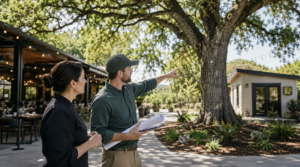
A mature tree occupies considerably more space below and above ground than the trunk suggests. Roots can extend through areas proposed for grading, foundations, drainage improvements, utility trenches, walkways, parking, or construction access. Branches and canopy spread can also affect equipment movement and building clearance.

A structure may appear to fit comfortably beside a tree on a preliminary site plan while construction activity still reaches an important portion of the root system.

Professional tree assessment can identify these issues before contractors begin excavation. Depending on the property and local requirements, an arborist may document tree locations, species, trunk measurements, condition, health, potential construction conflicts, tree protection zones, and recommended mitigation measures.

That information gives the design team an opportunity to respond while changes are still easier to make.

Restaurant Development News Shows the Importance of Planning Ahead

Growth announcements often focus on restaurant openings, new markets, franchise agreements, and impressive unit counts. Behind every successful opening, however, is an extensive development process involving real estate selection, plans, approvals, financing, construction, and operations.

Nation’s Restaurant News coverage of independent restaurant expansion continues to track restaurant groups moving into new markets and developing additional locations. Those stories demonstrate that expansion is not limited to the largest national chains. Independent restaurants and regional hospitality groups are also making significant real estate decisions as they grow.

The broader United States restaurant industry overview on Wikipedia also illustrates the enormous economic reach of restaurants across the country. The industry includes major national brands as well as a vast number of smaller and independently operated businesses, making restaurant real estate development an important part of communities throughout the United States.

For owners investing substantial money in property improvements, identifying development constraints early can protect both the project schedule and the investment.

Local Tree Regulations Can Change the Development Plan

Tree regulations vary widely between municipalities. A tree that can be altered or removed with limited restrictions in one community may receive significant protection in another.

Cities may regulate designated heritage trees, native species, trees over certain trunk diameters, street trees, trees within environmentally sensitive areas, or trees connected with approved development plans. Some jurisdictions also require replacement planting or mitigation when protected trees are removed.

These rules are important because the consequences can extend beyond landscaping. A protected tree located near the planned structure may affect the placement of the building, excavation methods, utility routing, foundation design, or access for construction equipment.

Discovering those restrictions after architectural plans have been finalized can create additional design work and delay permitting.

An early arboricultural assessment allows the tree information to become part of the site-planning process instead of becoming a problem after major decisions have already been made.

Expansion Costs Make Avoidable Delays More Significant

Restaurant development requires substantial capital, and operators have become increasingly sensitive to the economics of new locations.

Restaurant Business reporting on incentives designed to encourage restaurant expansion has documented how restaurant brands have used financial incentives to encourage franchisees to continue opening locations. The fact that brands are willing to provide significant development incentives illustrates how important construction economics have become to restaurant growth strategies.

Every redesign, permitting delay, construction change, or unexpected site condition has the potential to affect those economics.

Tree-related issues are only one component of a development budget, but they can become expensive when discovered late. Moving a foundation, rerouting utilities, changing excavation methods, modifying grading, replacing protected trees, or stopping construction while additional approvals are obtained can have consequences beyond the direct cost of the tree work.

Planning is generally less expensive than correcting an avoidable conflict during construction.

Restaurant Brands Are Looking for More Flexible Development Models

One of the clearest trends in restaurant expansion is flexibility.

Some growing concepts are using traditional freestanding restaurants, while others are exploring endcaps, inline locations, co-branded spaces, nontraditional venues, remodeled buildings, and new prototypes.

Restaurant Dive recently reported that Freddy’s was expanding its real estate approach to include more flexible formats as part of its growth strategy. The company’s development plans demonstrate how restaurant operators are paying close attention to the cost and configuration of the physical property rather than treating every new location the same.

That same principle applies to broader property development. The site should be evaluated as a whole.

Existing structures, trees, parking areas, drainage, utilities, neighboring properties, future construction, and usable open space all interact. Decisions made for one part of a property can affect what becomes possible elsewhere.

A Tree Report Can Help Architects Design Around Existing Conditions

Arborist documentation is particularly useful when it reaches the architect or designer before the final site plan is complete.

If a valuable tree has a significant root protection area, the building may be shifted slightly. A walkway may be rerouted. Utility trenches may be placed elsewhere. Construction access might be restricted to another portion of the property. Special foundation or excavation techniques may be considered where appropriate.

These adjustments are usually easier to evaluate on plans than after equipment arrives on the property.

A thoughtful development approach also does not assume that every tree creating a conflict needs to be removed. In some situations, retaining established trees can preserve shade, visual screening, character, and landscaping that would take decades to replace.

The objective is to understand the site well enough to make informed decisions.

Current Restaurant Growth Reinforces the Value of Site Due Diligence

Restaurant expansion continues despite a challenging operating environment. The U.S. Census Bureau’s retail and food services sales reporting remains one of the important sources for tracking consumer spending across retail and food-service businesses, while restaurant industry organizations and trade publications continue to document brands moving into new markets.

Individual expansion announcements reinforce how much development is still taking place. FSR Magazine’s coverage of new restaurant openings and market expansion has documented hospitality groups adding locations across major growth markets, including expansion across state lines.

At the same time, restaurant operators face high construction costs, labor expenses, financing considerations, and narrow operating margins. That combination makes due diligence increasingly valuable.

Tree assessment belongs alongside surveys, zoning reviews, utility research, environmental considerations, architectural planning, and other site investigations that help an owner understand a property before committing heavily to construction.

Tree Protection Also Supports Long-Term Property Value

Existing mature trees can be assets when they are healthy, appropriately located, and properly maintained.

Trees can provide shade for outdoor areas, create visual separation from neighboring properties, soften large parking areas, and improve the overall appearance of a developed site. For restaurants with patios, courtyards, event areas, or mixed-use property features, established landscaping can become part of the character guests associate with the location.

Construction damage may not always become visible immediately. Root cutting, soil compaction, grade changes, trunk injuries, and other disturbances can affect tree health long after the contractors have left.

Protecting appropriate trees during construction can therefore serve both regulatory and practical purposes.

A professional assessment gives the project team information that helps distinguish trees worth preserving, trees requiring special protection, trees that present concerns, and situations in which removal may be appropriate subject to local requirements.

Early Coordination Creates a Smoother Development Process

Restaurant owners already coordinate with architects, engineers, contractors, lenders, real estate professionals, municipal planners, equipment vendors, utility companies, and numerous other specialists during an expansion.

Tree professionals can become another valuable part of that team when the property contains trees that may be affected by development.

Early coordination gives everyone better information. The architect understands the tree constraints. The contractor knows which areas may require protection. The owner has a clearer picture of possible costs. The municipality receives documentation that addresses applicable tree requirements.

That is far preferable to discovering a protected tree, major root conflict, or required mitigation measure after construction plans and schedules have been established.

Conclusion

Restaurant expansion is becoming increasingly sophisticated. Operators are evaluating new markets, different building formats, mixed-use opportunities, redevelopment properties, and flexible real estate strategies as they look for sustainable ways to grow.

That makes careful site planning more important than ever.

When a property includes plans for an accessory dwelling unit and established trees are nearby, tree assessment should be considered early in the development process. Understanding tree condition, root zones, protected status, construction impacts, and local requirements can help architects and property owners make better decisions before plans become difficult or expensive to change.

The most successful developments are rarely the ones that simply move fastest. They are the ones that identify potential obstacles early, coordinate the right professionals, and build a realistic plan around the actual conditions of the property.

For restaurant owners, hospitality groups, and property investors pursuing expansion, that level of preparation can protect the construction schedule, reduce avoidable surprises, preserve valuable site features, and create a stronger foundation for whatever comes next.

Why Smart Palm Beach Restaurants Are Turning to Concrete Overlay for a Better First Impression

Restaurant News for Palm Beach Concrete Overlay

When a guest walks into a restaurant, the first impression begins long before the menu is opened, the server arrives, or the first plate hits the table. It starts at the entrance. It continues through the host stand, the dining room, the patio, the bar area, the restrooms, and every walkway in between. For Palm Beach restaurants, where style, atmosphere, cleanliness, and customer expectations are especially high, the condition of the floor can quietly shape how people feel about the entire dining experience.

That is why more restaurant owners are paying closer attention to concrete overlay. A worn floor, cracked surface, stained patio, or outdated tile can make even a great restaurant feel tired. On the other hand, a clean, polished, decorative surface can make the space feel modern, upscale, and intentionally designed. In a competitive dining market like Palm Beach, details matter. A restaurant does not need to be the most expensive place in town to look professional, inviting, and well cared for. It simply needs to make smart choices that improve how customers experience the space.

Restaurants throughout South Florida are constantly competing for attention, reservations, repeat visits, online reviews, and social media photos. Local dining guides such as The Palm Beaches restaurant and bar guide highlight just how broad and competitive the area’s food scene has become. From waterfront dining and casual cafés to upscale lounges and fine dining rooms, customers have options. A great first impression can be the difference between a one-time visit and a loyal customer.

The Floor Is Part of the Restaurant’s Brand

Restaurant branding is not just a logo, menu design, website, or sign out front. The physical space is part of the brand. The lighting, seating, music, wall finishes, table settings, and flooring all work together to tell customers what kind of experience they should expect. A Palm Beach restaurant with old, chipped, or stained floors may unintentionally send the wrong message, even if the food and service are excellent.

A concrete overlay gives restaurant owners a way to refresh the look of their floors without completely changing the identity of the space. It can be designed to look sleek and modern, warm and rustic, coastal and relaxed, or polished and upscale. This flexibility matters because Palm Beach restaurants are not all the same. A beachside seafood restaurant may want a different feel than a wine bar, steakhouse, café, hotel restaurant, or boutique bistro.

According to Wikipedia’s overview of Palm Beach, Florida, the town has long been associated with resort living, upscale shopping, historic architecture, and luxury hospitality. That history influences customer expectations. People visiting or living in Palm Beach often notice design details. They expect spaces to feel clean, attractive, and intentional. A floor that looks neglected can work against that expectation, while a well-designed concrete overlay can support it.

Concrete Overlay Can Help Create a Cleaner, More Updated Look

Cleanliness is one of the most important parts of a restaurant’s reputation. Customers may not know the technical details of flooring materials, but they do notice whether a space feels fresh, sanitary, and maintained. Old grout lines, cracked tile, stained concrete, peeling coatings, and uneven surfaces can make a dining room or patio feel less clean than it actually is.

Concrete overlay can create a smoother, more unified surface that looks cleaner and more professional. For restaurants, this can be valuable in both front-of-house and outdoor areas. Dining rooms, entranceways, patios, bar areas, and walkways all take a beating from constant foot traffic, spills, moisture, dropped utensils, moving chairs, and cleaning routines. Over time, even durable surfaces can start to look worn.

A professionally installed Palm Beach Concrete Overlay can help transform an existing surface into something more attractive and better aligned with the restaurant’s image. Instead of allowing cracked or outdated concrete to define the atmosphere, owners can use overlay as part of a larger visual upgrade.

Palm Beach Restaurants Compete in a Visual Dining Culture

Dining has become more visual than ever. Customers take photos of cocktails, brunch plates, desserts, dining rooms, patios, murals, table settings, and entryways. A restaurant’s design can become part of its marketing without the owner paying for an ad. When a guest posts a photo online, the background matters. Floors, walls, furniture, lighting, and overall atmosphere become part of the image.

Palm Beach restaurants are especially influenced by this visual culture because the area attracts residents, tourists, business travelers, seasonal visitors, and people looking for memorable experiences. Coverage from sources like Palm Beach Illustrated’s Food & Drink section shows how much attention the local dining scene receives. Restaurants are not only judged by food; they are judged by ambiance, presentation, and the feeling of the space.

Concrete overlay can contribute to that feeling. A decorative finish can make a patio look more polished, help an entryway feel more upscale, or give a casual dining room a more modern appearance. It can be subtle or dramatic depending on the concept. For restaurants that want more social media-friendly spaces, floors should not be treated as an afterthought.

A Better First Impression Can Influence Customer Confidence

Customers often make fast judgments. They may not say it out loud, but they notice when a restaurant looks worn down. If the floor looks damaged, they may wonder what else has been neglected. That may not be fair, but it is how first impressions work. A restaurant can have a talented chef, a great menu, and friendly service, but the environment still shapes trust.

This is especially important in a market where dining recommendations, online reviews, and local reputation can affect traffic. Restaurant pages and dining coverage on sites like Eater Miami’s Palm Beach section show how customers and food writers pay attention to what is new, notable, and worth visiting. A restaurant that looks updated has a better chance of feeling relevant.

Concrete overlay helps owners address one of the most visible parts of the property. Instead of replacing an entire slab or living with surfaces that no longer match the restaurant’s standards, overlay can provide a refreshed look that supports the brand. For a customer walking in for the first time, that can create a sense of confidence before the meal even begins.

Outdoor Dining Areas Need Special Attention in Palm Beach

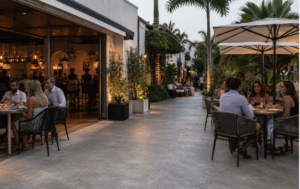
Outdoor dining is a major part of the Palm Beach experience. Patios, courtyards, sidewalks, poolside restaurants, waterfront dining areas, and open-air lounges are part of what makes dining in South Florida appealing. However, outdoor surfaces also face sun, humidity, rain, salt air, furniture movement, foot traffic, and food and beverage spills.

A patio with cracked, stained, or uneven concrete can make an outdoor dining area feel less inviting. It can also create a mismatch between the restaurant’s atmosphere and the customer’s expectations. Guests may come for a beautiful meal in a beautiful setting, but if the flooring looks rough, the experience feels less polished.

The Downtown West Palm Beach dining district includes a wide variety of restaurants and dining experiences, showing how important walkable, attractive hospitality spaces are to the broader Palm Beach area. In these high-traffic environments, surfaces need to look good and hold up under constant use. A concrete overlay can help improve the appearance of patios and walkways while giving the restaurant a more cohesive look.

Concrete Overlay Can Support Renovations Without Changing Everything

Restaurant renovations can be expensive and disruptive. Owners often want a fresher look, but they cannot always afford to close for a long remodel or replace every design element. This is where concrete overlay becomes especially useful. It can help create a noticeable transformation without requiring a complete redesign.

A restaurant may keep its existing furniture, lighting, bar, and wall colors while upgrading the floor to tie everything together. In some cases, the flooring is the missing piece that makes the entire space feel more current. A decorative concrete finish can make older furniture look intentional again, help a patio feel more refined, or make a dining room look cleaner and more finished.

For Palm Beach restaurants, this matters because trends change. Customers notice when a space feels dated. A floor upgrade can help a restaurant keep up with the local hospitality scene without losing its personality. It is not always about becoming trendy. Sometimes it is about making the space feel cared for, current, and ready for customers.

Restaurant Surfaces Must Balance Beauty and Practicality

A restaurant floor cannot only look good. It also has to function. Restaurant floors deal with spills, grease, moisture, dropped items, rolling carts, heavy foot traffic, and frequent cleaning. Owners must think about appearance, durability, maintenance, and safety. A beautiful floor that is hard to maintain can quickly become a problem.

Concrete overlay gives owners design flexibility while still focusing on practical use. Depending on the finish and application, it can be used to create surfaces that are attractive and easier to visually maintain than older, damaged concrete or tile. For restaurant owners, that balance matters. They need spaces that photograph well, welcome customers, and stand up to everyday business.

Food safety and cleanliness are also part of the larger restaurant environment. Official resources such as the Florida Department of Health’s inspection and complaint information remind restaurant owners how closely food service environments are monitored. While flooring is only one part of a restaurant’s overall operation, cleanable and well-maintained surfaces contribute to the customer’s perception of professionalism.

First Impressions Affect Reviews, Referrals, and Repeat Visits

Many restaurant owners focus heavily on food quality and service, which are obviously essential. However, the physical environment can affect how customers describe the experience afterward. A guest may say the food was good, but the place looked old. They may say the patio was nice, but the floors looked dirty. They may say they liked the meal, but the restaurant did not feel worth the price.

Those comments matter. They can show up in online reviews, private conversations, social media captions, and local recommendations. A concrete overlay will not replace good food or service, but it can remove a visual weakness that hurts the overall impression.

When the flooring looks clean, modern, and aligned with the restaurant’s concept, customers are more likely to feel that the business is well managed. That feeling can support stronger reviews, better photos, more referrals, and more confidence in the dining experience. In a place like Palm Beach, where atmosphere is part of the value, this can make a meaningful difference.

Concrete Overlay Can Help Restaurants Look More Upscale

Not every Palm Beach restaurant is trying to be formal or expensive. However, nearly every restaurant wants to look worth visiting. Concrete overlay can help create a more upscale appearance without making the space feel stiff or overdone. It can be customized to fit the restaurant’s personality, whether the goal is elegant, coastal, industrial, modern, Mediterranean, tropical, or classic.

A polished or decorative floor can make the entrance feel more impressive. It can help the bar area look more refined. It can make outdoor dining feel more finished. It can also help older properties compete with newer restaurants that were designed with modern finishes from the beginning.

The Palm Beach dining scene is constantly being watched by locals, visitors, lifestyle publications, and food-focused media. Restaurant owners who invest in appearance are not simply decorating. They are protecting the way people perceive the business.

Conclusion: Smart Restaurants Know the Details Matter

Palm Beach restaurants operate in a market where customers expect more than a meal. They expect atmosphere, cleanliness, comfort, and a memorable experience. The floor may not be the first thing owners think about when improving a restaurant, but it is one of the first things customers see and feel. It affects the entrance, the dining room, the patio, the bar, and the overall impression of the business.

Concrete overlay gives restaurant owners a practical way to refresh worn surfaces, improve visual appeal, and create a more professional environment. It can support branding, improve the look of high-traffic areas, and help a restaurant feel cleaner, newer, and more intentional. For Palm Beach restaurants competing in a stylish and highly visible dining market, that first impression matters.

Smart restaurant owners understand that customers notice details. They notice the lighting, the seating, the service, the menu, and the condition of the space. A beautiful concrete overlay can help make sure the first impression is working for the restaurant, not against it.

Why Every Growing Restaurant Should Understand Warehousing and Fulfillment

Restaurant News for Warehousing and Fulfillment

Running a successful restaurant takes more than a great menu, a talented kitchen, and a friendly front-of-house team. Growth brings more customers, more moving pieces, more inventory decisions, and more pressure to keep operations consistent. As a restaurant expands, whether through catering, packaged goods, delivery, multiple locations, events, or retail partnerships, the back-end systems become just as important as the dining experience itself.

That is why every growing restaurant should understand Warehousing and Fulfillment. It is not only a topic for large retailers or national food brands. It is a practical business function that can help restaurants stay organized, protect inventory, manage demand, and create a smoother path for growth.

The restaurant industry is constantly changing. Reports from sources like Nation’s Restaurant News and Restaurant Business Online regularly show how operators are adapting to rising costs, shifting guest expectations, labor challenges, menu innovation, and new revenue opportunities. In that kind of environment, restaurants that understand logistics have a stronger foundation for making smart decisions.

Growth Creates New Operational Pressure

A small restaurant can often manage inventory with basic storage, a few trusted vendors, and a routine ordering schedule. That may work well in the beginning. However, as the restaurant grows, the same simple system can start to feel stretched.

More customers means more ingredients. More catering orders mean more packaging. More online sales mean more shipping materials. More locations mean more coordination. More seasonal promotions mean more demand planning. Growth is exciting, but it also creates pressure that can affect consistency if the restaurant does not have the right support behind the scenes.

A growing restaurant may need to store dry goods, branded merchandise, sauces, spice blends, frozen items, uniforms, retail products, disposable containers, cleaning supplies, or event materials. Without a strong system, these items can become scattered across closets, storage rooms, offices, and supplier locations. That creates confusion and can lead to waste, delays, over-ordering, and missed opportunities.

Warehousing gives a restaurant a more organized way to manage what it owns. Fulfillment gives the business a more reliable way to move those items where they need to go. Together, they help create order behind the scenes so the restaurant can serve guests with more confidence.

Restaurants Are Becoming More Than Dining Rooms

Modern restaurants are no longer limited to tables, takeout counters, and drive-thru windows. Many restaurants now operate as multi-channel brands. They sell meal kits, bottled sauces, spice mixes, frozen meals, merchandise, gift boxes, subscription items, catering packages, and special event bundles.

This shift has become part of the larger conversation around the foodservice industry. Publications like QSR Magazine cover quick-service and fast-casual brands that continue to grow through technology, menu expansion, loyalty programs, and new operating models. These changes show that restaurants are not only serving meals. They are building brands that reach customers in more ways.

For a restaurant that wants to grow beyond the dining room, fulfillment becomes especially important. When a guest orders a branded product online, that order needs to be picked, packed, labeled, and shipped correctly. When a catering customer expects supplies at a certain time, the restaurant needs dependable coordination. When a new location opens, equipment, printed materials, packaging, and inventory may need to arrive in an organized way.

Without fulfillment support, restaurant teams may end up spending valuable time boxing orders, tracking packages, searching for supplies, or fixing mistakes. That pulls attention away from food quality, guest service, staff training, and revenue-building activities.

Inventory Control Protects Profit Margins

Restaurants operate in an environment where margins matter. Food costs, labor costs, rent, utilities, insurance, packaging, equipment, and delivery expenses all affect profitability. When inventory is poorly managed, those costs can rise quietly.

Extra stock can expire, spoil, become damaged, or take up needed space. Too little stock can interrupt service, delay catering jobs, or force last-minute purchases at higher prices. Misplaced items can cause duplicate ordering. Poor visibility can make it difficult to know what the restaurant has available, what needs replenishment, and what is sitting unused.

A warehousing system can help a restaurant track inventory more clearly. This matters for both food-related and non-food items. Even when a restaurant is not storing perishable ingredients in a warehouse, it may still need better control over dry goods, disposables, retail inventory, branded materials, and operational supplies.

Foodservice is a highly detailed business, and resources from the National Restaurant Association regularly point to the importance of strong operations, safety, workforce planning, and business management. Warehousing and fulfillment fit into that bigger picture because they help restaurants build better structure around the products and supplies that support daily service.

Consistency Builds Customer Trust

Guests may never see a restaurant’s storage system, vendor coordination, or fulfillment process. They will still feel the impact of it.

A restaurant that runs out of key menu items too often can frustrate loyal customers. A restaurant that ships the wrong product can disappoint online buyers. A catering order that arrives missing supplies can damage a relationship with a corporate client. A multi-location restaurant that cannot keep branded materials consistent may weaken the customer experience.

Consistency is one of the strongest trust builders in the restaurant business. Guests come back because they know what to expect. They trust the food, the timing, the service, and the overall experience. Behind that consistency is usually a system that keeps the operation steady.

Warehousing and fulfillment help protect that consistency by making sure products, supplies, and materials are stored properly and moved accurately. When the back end is organized, the front end has a better chance of staying smooth.

Better Logistics Can Support Local and Regional Expansion

A restaurant that wants to grow from one location to several locations has to think differently. What worked for one restaurant may not work for three, five, or ten. As the business expands, the owner needs systems that can support repeatable operations.

This is where warehousing becomes a growth tool. Instead of each location managing every supply decision on its own, a restaurant group may use centralized storage and distribution. This can make it easier to keep packaging consistent, manage promotional materials, support new openings, and control purchasing.

Restaurant expansion also comes with timing challenges. A new location may need branded signage, smallwares, uniforms, menus, retail products, dry goods, and opening supplies. If those items are not organized and staged properly, the opening process can become more stressful than necessary.

Industry reporting from sources like Restaurant Dive often highlights how restaurant brands must balance growth, operations, technology, and consumer demand. Logistics may not always be the most visible part of that story, but it is often one of the most important. A restaurant cannot grow smoothly if the back-end structure is always catching up.

Fulfillment Helps Restaurants Create New Revenue Streams

Restaurants are learning that revenue can come from more than dine-in and takeout. A strong brand can create opportunities through shipped products, event kits, holiday bundles, corporate gifting, online merchandise, and retail-ready food items.

For example, a barbecue restaurant may sell bottled sauce. A bakery may ship cookie boxes. A coffee shop may sell branded mugs and beans. A pizza restaurant may offer frozen products. A chef-driven concept may create pantry items, seasoning blends, or meal kits.

These ideas can increase revenue, strengthen brand recognition, and keep customers connected even when they are not physically in the restaurant. However, they require dependable fulfillment. Customers expect online orders to be accurate, packaged well, and delivered in a reasonable timeframe.

This is where a restaurant can benefit from thinking more like a brand, not just a local storefront. According to the general definition of a restaurant, the core purpose is preparing and serving food and drinks to customers, but today’s growth-minded restaurants often extend that customer relationship through products, experiences, and digital ordering. Fulfillment helps make those extensions possible.

Warehousing Can Reduce Clutter and Improve Focus

Restaurant space is valuable. Every square foot should serve a purpose. When storage areas become overcrowded, it affects efficiency. Staff may struggle to find what they need. Managers may lose track of inventory. Supplies may spill into office areas, prep spaces, or other parts of the restaurant.

A warehouse solution can help remove excess clutter from the restaurant itself. This allows the physical restaurant to focus on what it does best: preparing food, serving guests, training staff, and creating a strong dining experience.

For restaurants with limited space, this can be especially helpful. Urban restaurants, small cafes, food trucks, bakeries, and compact quick-service locations may not have the room to store bulk supplies or promotional inventory on-site. Off-site warehousing can give the business more breathing room without forcing it to sacrifice valuable guest-facing or kitchen space.

Supply Chain Awareness Makes Owners Better Decision-Makers

Restaurant owners do not need to become logistics experts, but they do need to understand how warehousing and fulfillment affect growth. A basic understanding can help owners ask better questions, choose better partners, and avoid costly mistakes.

They can think through where inventory is stored, how often products move, what items need temperature control, how online orders are handled, how supplies are tracked, and how quickly materials can be delivered. They can also better understand the difference between simply having storage space and having a coordinated logistics system.

A restaurant that understands these details is better prepared to negotiate with vendors, plan promotions, launch new products, and expand into new markets. It can also respond more confidently when demand changes.

Conclusion

Every growing restaurant eventually reaches a point where great food alone is not enough to support the next level of success. The business needs structure, organization, inventory control, and dependable movement of goods. Warehousing and fulfillment help create that structure.

For restaurants expanding into catering, online sales, retail products, multiple locations, events, or branded merchandise, logistics can become a major part of the growth strategy. It helps protect margins, improve consistency, reduce clutter, support customer trust, and open the door to new revenue opportunities.

A restaurant may begin with a kitchen, a menu, and a loyal group of guests. As it grows, it becomes something bigger. It becomes a brand, an operation, and a business with moving parts that need to work together. Understanding warehousing and fulfillment gives restaurant owners a stronger foundation for that growth, helping them serve more people without losing the quality, care, and consistency that made the restaurant worth growing in the first place.

What Restaurant Growth Can Borrow from Car Dealership Consulting 🍽️

Restaurant News for Dealership Consulting

Restaurants and car dealerships may look like they live in different worlds, but the growth logic behind both businesses is surprisingly similar. Each one depends on first impressions, lead conversion, follow-up, customer experience, repeat business, reputation, and strong local visibility. That is why the operational discipline behind Dealership Consulting has real value for restaurant owners who want more than occasional traffic spikes. It offers a way to think beyond one transaction and build a system that consistently turns attention into revenue. The restaurant industry is also entering 2026 with cautious optimism, with the National Restaurant Association projecting $1.55 trillion in sales and modest real growth, which makes disciplined execution even more important in a competitive market.

The Best Restaurants Think Like Revenue Businesses, Not Just Food Businesses

One of the biggest lessons restaurants can take from the dealership world is that growth rarely happens by accident. High-performing dealerships do not sit back and hope people walk in and buy. They build a repeatable process for attracting attention, handling inquiries, nurturing interest, creating trust, and earning the next sale. Restaurants benefit from the same mindset. Great food still matters, but food alone does not guarantee consistent growth. Growth comes from a repeatable system that makes it easy for people to discover the brand, choose it, remember it, and come back.

This is where many restaurants leave money on the table. They focus heavily on operations inside the building while underinvesting in systems that move guests from awareness to loyalty. A dealership would never treat its pipeline casually. It watches lead sources, trains staff on conversion, monitors reviews, improves presentation, and follows up aggressively. Restaurants that adopt a similar mindset begin to see marketing as a measurable business asset instead of an occasional promotion.

Follow-Up Is Not Pushy When It Creates a Better Guest Relationship

Dealerships understand that most revenue does not come from a single touchpoint. It comes from follow-up. A customer may browse online, visit in person, think it over, come back, and finally buy. Restaurants can learn from that by taking guest follow-up much more seriously. A first-time diner is not the end goal. A returning diner is the real asset.

That is why restaurant operators should pay attention to trends covered by Nation’s Restaurant News, which point to authenticity, social media, influencer strategy, and AI-supported marketing as major forces shaping restaurant growth. Those trends matter because they all reinforce one truth: guests do not want disconnected promotions. They want relevant, memorable communication that feels human and timely.

A restaurant can borrow the dealership model by building simple follow-up paths after the first visit. That includes thank-you emails, text reminders, loyalty invitations, special event notices, birthday offers, and personalized re-engagement campaigns. None of that has to feel robotic. When done well, it feels attentive. In fact, FSR Magazine’s look at restaurant marketing shifts highlights that the real opportunity is turning first-time guests into regulars through intentional follow-up, smarter email and SMS cadence, and loyalty-centered communication.

Reputation Management Is the New Front Door

A dealership knows that a shopper will often read reviews before speaking to anyone. Restaurants live in that same reality, only faster. Many buying decisions now happen before a customer ever sees the host stand. They search, scan photos, skim reviews, check prices, and decide whether the experience feels worth their time and money.

That makes reputation management one of the clearest restaurant lessons from the dealership world. It cannot be passive. Restaurants need a system for earning reviews, responding professionally, updating photos, refining descriptions, and reinforcing brand trust everywhere a guest may look. A weak online presence creates friction. A strong one creates confidence.

The current restaurant marketing landscape reflects that pressure. Restaurant Dive’s restaurant marketing coverage shows brands leaning into integrated campaigns, AI-backed loyalty efforts, local marketing, and stronger value messaging as competition intensifies. In other words, restaurant growth is no longer just about having a good concept. It is about how well that concept is packaged, communicated, and reinforced in the market.

Merchandising Matters More Than Many Restaurants Realize

Dealerships know presentation sells. The way vehicles are positioned, described, photographed, and priced affects buyer behavior. Restaurants can borrow that principle through menu engineering, digital presentation, and offer framing. A menu is not just a list. It is a sales tool. A landing page is not just information. It is a conversion asset. A featured special is not just a dish. It is merchandising.

That is why operators should study practical resources like Modern Restaurant Management’s 2026 Restaurant Playbook, which emphasizes loyalty, pricing precision, and digital menu optimization. The article points to the importance of frequency, strategic pricing, and designing digital menus for profitability, not just convenience. Those are classic consulting principles in a new setting: show the right offer, to the right customer, in the right way, at the right time.

For a restaurant, that could mean clearer menu hierarchy, stronger item descriptions, better photography, smarter bundled offers, improved online ordering flow, and promotional copy that highlights value without sounding cheap. Dealerships do this with inventory and financing. Restaurants can do it with menus, specials, catering packages, family meals, seasonal promotions, and loyalty-based offers.

Lifetime Value Beats One-Time Traffic

One of the strongest ideas restaurants can borrow from dealership thinking is the concept of customer lifetime value. Dealerships understand that the first sale is not the whole relationship. There are future service appointments, trade-ins, referrals, financing opportunities, and repeat purchases. Restaurants should look at guests the same way.

A single visit matters, but a guest who returns twice a month, brings coworkers to lunch, orders catering for an office, celebrates birthdays on-site, and tells friends about the brand is dramatically more valuable. That kind of growth does not come from generic advertising alone. It comes from systems built to create habit, connection, and consistency.

Even the basic definition from Wikipedia’s overview of loyalty programs supports this point well: loyalty programs are designed to encourage customers to keep coming back. In the restaurant world, that means the goal is not only to drive a visit. It is to build a reason for the next visit and the one after that.

This is also why blanket discounting can weaken a brand over time. Dealers know that cutting price alone is not a sustainable growth strategy. The same is true for restaurants. Frequent discounts may create temporary traffic, but they do not always create loyalty. Stronger operators build value through experience, convenience, trust, and relevance. They stay memorable without training guests to wait for a coupon.

Local Visibility Still Wins

Dealerships are intensely local businesses. Restaurants are too. Even brands with multiple units win market share one neighborhood at a time. That makes local visibility one of the most important shared lessons between the two industries.

A restaurant should think like a strong local operator: dominate map visibility, build community awareness, stay active on social platforms, keep branding consistent, earn media attention when possible, and maintain an updated website that reflects the real guest experience. Restaurant marketers are clearly pushing in that direction. QSR Magazine’s digital-first restaurant playbook argues that loyalty has to extend beyond the four walls of the restaurant, while Restaurant Business continues covering the industry’s emphasis on value, consumer behavior, and market competitiveness. Together, those signals point to the same conclusion: restaurants cannot rely only on location anymore. They have to build a strong local brand presence that follows guests wherever they discover, compare, and choose where to eat.

This is where consulting-style discipline helps. A restaurant that audits its website, reviews, local listings, ad messaging, loyalty data, and guest communication on a regular basis starts acting less like a business that waits for traffic and more like a business that creates demand.

Accountability Turns Strategy Into Growth

Another valuable dealership principle is accountability. Strong dealerships track performance constantly. They know how many leads came in, how fast they were answered, how many appointments were set, how many showed up, and how many converted. Restaurants need that same seriousness around growth.

That does not mean turning hospitality into cold math. It means respecting the numbers that reveal where growth is leaking away. Restaurants should know which campaigns create return visits, which specials actually lift margin, which platforms bring quality traffic, which team behaviors drive better reviews, and which customer segments are most profitable. Strategy gets stronger when the numbers are clear.

The broader restaurant outlook supports that disciplined approach. The National Restaurant Association says success in 2026 will depend heavily on operators getting the math right while responding to guest demand for convenience, social experience, and value. That makes consulting-style analysis even more relevant for restaurant owners who want durable growth instead of reactive marketing.

Conclusion

What restaurant growth can borrow from car dealership consulting comes down to structure, consistency, and customer thinking. Restaurants that grow well do not rely on luck, random specials, or one-time bursts of attention. They treat marketing like a system. They treat every guest like a relationship. They follow up, protect their reputation, improve presentation, watch the numbers, and keep building local trust.

That is exactly why the restaurant world has something to learn from dealership-style discipline. Both industries succeed when they stop thinking only about the next transaction and start building a repeatable path to trust, conversion, loyalty, and long-term value. When a restaurant adopts that mindset, growth becomes more stable, more measurable, and far more scalable. 🚗🍽️

A Table for Two Worlds: Why The Last Knight of Eden Belongs With Dinner at Your Favorite Restaurant 🍽️📖

Restaurant News for christian fantasy books

Some books demand silence, a locked door, and a long stretch of uninterrupted time. The Last Knight of Eden is not that kind of book. It is the kind that travels well—dark, modern, faith-laced fantasy that feels even more vivid when you read it in the soft hum of a restaurant: clinking glasses, low conversation, warm lighting, and that moment between courses when you get to sink into another world without abandoning the one in front of you.

Matthew Pearce’s story follows Ezra Thorne, a young man carrying the weight of a fractured home and a mind he does not fully trust, who disappears into the underground tunnels of London and wakes something ancient beneath the city’s skin. A single spoken name drives a monstrous presence back into the dark, and Ezra is pulled into the Edenic Order, a secret brotherhood sworn to guard the living Word against creatures older than history.

A Christian Fantasy That Feels Immediate and Modern ✨

What makes The Last Knight of Eden such a strong Christian fantasy pick for restaurant reading is the way it anchors spiritual power in a setting that feels close enough to touch. London is not a distant fairytale kingdom here. It is streets and tunnels, stone and shadow, everyday life above and mythic warfare beneath. That contrast mirrors the exact feeling of sitting in a restaurant: the ordinary made special, the familiar turned cinematic by a little atmosphere and intention.

Ezra’s journey is also built on tension that does not require perfect quiet to land. He is not stepping into faith as a decorative theme or a gentle vibe. He is colliding with it as something alive, dangerous, and demanding. Inside the Order’s Cloister, Ezra learns that scripture is not merely written—it is spoken, and some voices are born to carry it. Relics respond to him. Scrolls answer his breath. Visions arrive like warnings.

That is restaurant-friendly storytelling because it reads like a series of charged moments. You can absorb a scene, set the book down when your food arrives, and pick it back up without losing the emotional thread. It is immersive without being fragile.

The Story’s Natural Rhythm Fits the Pace of Dining 🕯️

Restaurants have built-in “chapters.” You arrive. You settle. You order. You wait. You taste. You pause. You talk. You linger. The Last Knight of Eden matches that rhythm with a narrative that moves in pulses: discovery, threat, training, doubt, revelation, escalation.

Ezra’s life does not slowly drift into fantasy—it snaps into it. One minute he is a suspended student wrestling with the fear of betrayal from his own mind, and the next he is confronting what lives under a city and what wakes when the wrong thing is spoken aloud. That kind of momentum works beautifully between sips and bites. Even a short reading window can deliver something satisfying: a new clue, a new danger, a new crack in the walls of what Ezra believed was real.

And because the book is a dark modern fantasy, the atmosphere of a restaurant can act like an amplifier instead of a distraction. Low light makes the Cloister feel colder. Background noise makes underground tunnels feel more alive. A candle on the table makes the imagery lean sharper and more mythic.

Faith in This World Is Not Gentle, and That’s the Point ⚔️

Some Christian fantasy stories keep faith at arm’s length, afraid of weight and consequence. The Last Knight of Eden leans the other direction. It treats faith like a force that can burn, protect, judge, and demand courage. The Word in this story is living, carried by voice, guarded by oath, contested by ancient powers.

That seriousness is part of why it makes such a strong “dining read.” Restaurants can be places where people celebrate, reconcile, plan, or quietly reset. You are already in a setting that invites reflection, even if it is subtle. When you pair that environment with a book where spiritual power has consequence, the story lands with extra gravity.

Ezra is not presented as a polished saint. He is wounded, uncertain, and carrying internal fear. The Order sees him as miracle to some and as risk to others—especially Miriam, the blade-wielding knight who views him as danger waiting to happen. Power without control has broken the world before, and the story treats that warning as real.

That tension—gift versus threat, calling versus collapse—creates the kind of emotional pull that keeps you turning pages even when your entrée shows up.

A Book That Respects Your Attention Span Without Dimming Its Depth 🍷

Reading at a restaurant is not the same as reading on a couch. You are sharing attention with a menu, a server, a companion, your own senses. The best restaurant books do not punish you for looking up. They reward you for returning.

The Last Knight of Eden does that by building a world that is vivid and symbolic without requiring you to memorize a glossary to enjoy it. You can read a paragraph, catch an image, feel the meaning, and hold onto it while you take a bite. When you return, the tone snaps back into place quickly because the stakes are emotional and spiritual, not just technical.

It also helps that the story’s core ingredients are instantly graspable: secret orders, hidden histories, mythic conflict beneath modern life, and a reluctant hero who did not ask to be chosen. Those elements are sturdy. They travel well.

The Restaurant Setting Makes the Hidden-World Theme Hit Harder 🌙

There is a special kind of magic in reading a book about hidden realities while sitting in a public place. In The Last Knight of Eden, the surface world is normal and the underworld is listening. Sacred ground holds secrets. Long-sealed forces stir. Nephilim move beneath what people assume is safe.

Now place that feeling on top of a restaurant table.

Around you, people are laughing, ordering dessert, scrolling their phones, celebrating birthdays. The room is bright with ordinary life. You, meanwhile, are reading about a world where the unseen presses close to the seen, where the wrong breath can wake something, and where spoken truth carries power. That contrast turns a simple dinner into an experience. It makes the story feel closer, like it could be happening under the building you are sitting in.

It is not about pretending reality is haunted. It is about letting fiction sharpen your awareness: the sense that life is layered, that meaning runs deeper than what is obvious, that the world may be louder than it looks.

A Quiet Ritual That Pairs Well With Hospitality and Restaurant Culture 🍽️✨

A great restaurant meal is not just fuel—it is hospitality, atmosphere, pacing, and care. The restaurant industry talks about those elements constantly because they shape how people feel when they dine. For anyone who likes weaving books into everyday life, it is fun to notice how the worlds overlap.

Industry outlets like Nation’s Restaurant News, Restaurant Business, and Restaurant Dive regularly explore how experience, ambience, and consumer behavior shape the way people gather for meals. The broader conversation shows up through organizations such as the National Restaurant Association Press Releases and trade coverage like QSR Magazine and Bar & Restaurant. Those sources exist because dining is not only about food—it is about the moment.

That is exactly why The Last Knight of Eden works during dinner. It is a story built around the idea that words matter, that what is spoken carries weight, and that hidden vows shape visible life. In a place designed for human connection and shared experience, that theme lands with extra impact.

Conclusion: The Best Christian Fantasy Restaurant Read Feels Like an Experience, Not a Task 🕯️📖

The Last Knight of Eden is one of the best Christian fantasy books to read while dining at a restaurant because it meets the moment you are already in. It is modern enough to feel immediate, dark enough to feel cinematic, and spiritually charged enough to leave an echo after you close the cover. It delivers scenes you can savor between courses, themes you can carry quietly back into the room, and a sense of hidden-world wonder that pairs perfectly with the soft ritual of a meal.

Ezra Thorne’s story is not gentle faith as decoration. It is faith as fire, scripture as living voice, and calling as something that can save what remains or burn it down. That kind of Christian fantasy does not just entertain. It turns dinner into a doorway. ✨

Pallets a Restaurant Should Use for Safer Storage, Cleaner Inspections, and Smoother Deliveries

Restaurant News for Pallets

Pallets are one of those behind-the-scenes decisions that quietly shape how a restaurant runs day to day. They affect food safety, pest control, organization, staff efficiency, and even how confident an inspector feels walking through the back door. The right pallet choice keeps product off the floor, supports clean rotation, avoids contamination risks, and holds up in coolers and freezers without turning into a constant headache. 😊

Below is a practical guide to the pallet types that fit restaurant realities, along with how to match pallets to dry storage, walk-ins, receiving, and high-turn inventory.


Start With the Non-Negotiables: Cleanability, Compliance, and Control

Restaurants live in a world where storage has to stay clean, visible, and easy to maintain. Pallets should help that, not fight it. The best pallets for restaurants share a few traits:

They keep food and food-contact items properly elevated and easy to clean around, which aligns with common industry food-safety storage expectations. A clear example is ServSafe guidance that emphasizes storing food at least six inches off the floor and keeping storage areas clean and dry.

They avoid porous surfaces that can hold moisture, odors, and residue. That matters in busy back-of-house spaces where spills and condensation happen.

They work in your actual environment, including walk-in humidity, freezer temperatures, tight receiving areas, and frequent restocking.

They reduce risk, including splinter hazards, nail pops, and contamination exposure that can come with damaged or questionable pallets.


Food-Grade Plastic Pallets: The Best Default for Most Restaurants

For most restaurants, food-grade plastic pallets are the strongest all-around choice. They are easier to wash, do not absorb moisture like wood, and hold up well in damp walk-ins where cardboard and untreated wood tend to deteriorate faster.

Plastic pallets also align with how many restaurant operators organize storage when reopening or reorganizing walk-ins. The National Restaurant Association’s walk-in reorganization guidance is blunt about wood pallets in this setting, making the point that wood pallets are not the choice they want in food storage areas.

Where plastic pallets shine

  • Walk-ins and prep-adjacent storage where moisture is common

  • Beverage storage, dairy, produce cases, and anything with frequent rotation

  • Receiving areas where fast wipe-down and visual cleanliness matter

What to look for

  • “Food-grade” or “hygienic” design that minimizes hollow cavities

  • Non-slip deck surfaces for stacked boxes

  • A load rating that matches your heaviest deliveries

  • Rackable designs if you use pallet racking or elevated shelving systems


New, Heat-Treated Wood Pallets: Acceptable in Dry Storage With Tight Standards

Wood pallets are common in distribution, and they can work in restaurants under the right conditions, especially in dry storage where humidity is controlled and pallets stay clean and intact.

The key is new and heat-treated wood, with a strict rule that cracked, stained, chemically smelling, or repaired pallets do not enter your storage areas. Older industry coverage has long flagged concerns around contamination and recommends plastic or new wood pallets for fresh and sensitive categories.

Where wood can make sense

  • Dry storage rooms with good airflow and low moisture

  • Light to moderate loads where the pallet stays stationary and clean

What to avoid

  • Reused pallets of unknown origin

  • Pallets with visible spills, grease marks, or strong odors

  • Pallets with splinters, protruding nails, or soft, wet boards

If wood is used at all, it belongs in the cleanest, driest part of the operation with consistent monitoring and quick removal when damaged.


Composite and Pressed Pallets: A Middle Ground With Consistency Benefits

Composite pallets, including pressed wood or mixed-material designs, can offer more uniform sizing than random wood pallets and can reduce splintering compared to rough boards. They are often lighter than heavy wood blocks and can be easier to stack when not in use.

They are not always the top pick for wet walk-ins, but they can work well for dry goods and predictable inbound inventory. For restaurants that care about standardizing back-of-house systems, consistency matters because it reduces mishaps during receiving and storage resets.

A helpful baseline is understanding what pallets are and how different materials behave in handling systems, including the common dimensions used in North America.


Dunnage Racks and Pallet Alternatives: Sometimes the Better Choice Inside Walk-Ins

In many restaurants, “pallet” ends up meaning “anything that keeps product off the floor.” Inside walk-ins, dunnage racks often outperform pallets because they are designed specifically for food environments, are easy to clean, and create consistent clearance under product.

Industry guidance aimed at restaurants often names dunnage and racks as the preferred way to create that clearance in coolers and storage.

Pallets can still be used in walk-ins, but racks frequently win because they keep aisles tidy, support FIFO, and make it easier for teams to see what is expiring first.


Match the Pallet to the Zone: Dry Storage, Receiving, Walk-Ins, Freezers

One of the biggest mistakes is picking a single pallet type and forcing it everywhere. Restaurants run multiple storage “micro-environments,” and pallets should match the zone.

Receiving and staging

  • Plastic pallets handle fast cleanup better and look cleaner during walkthroughs.

  • If wood is used, it stays in staging only, not long-term storage.

Dry storage

  • Plastic or new, clean wood can work.

  • Consistency matters for stacking and reducing box crush.

Walk-ins

  • Plastic pallets or, better yet, dunnage racks for most categories.

  • Prioritize washability and airflow.

Freezers

  • Freezer-rated plastic pallets are a strong pick because they resist moisture damage and stay stable through temperature cycling.

  • Consider racking systems and corrosion-resistant storage hardware for cold environments, which is commonly recommended for cooler and freezer storage setups.


Think Beyond the Pallet: Traceability, Supplier Standards, and Modern Restaurant Operations

Restaurants increasingly care about traceability and tighter supply chain visibility. Pallets and unit loads are part of that picture, especially as suppliers standardize labeling, scanning, and inventory controls. Restaurant operations coverage has discussed industry moves toward better traceability tools and supply chain standards.

On the restaurant side, the National Restaurant Association has also published guidance connected to traceability expectations from regulators, reinforcing that restaurants are not “outside” the supply chain conversation anymore.

This matters because a restaurant using clean, standardized pallets or pallet alternatives usually runs a cleaner receiving process, keeps inventory more organized, and reduces the scrambling that causes cross-contamination and missed rotation.

For a broader operational view, restaurant-focused supply chain coverage has highlighted how restaurants are tightening inventory practices and efficiency to stay competitive, which connects directly to how storage is set up and maintained.


Further Reading Related to Restaurant Industry Coverage


Conclusion

Restaurants do best with pallets that support clean storage, fast cleanup, consistent organization, and low-risk handling. Food-grade plastic pallets are the strongest default for most operations, especially anywhere moisture is present. New, heat-treated wood pallets can work in controlled dry storage when standards are strict and damaged pallets are removed immediately. In walk-ins, dunnage racks and food-safe elevated storage often outperform traditional pallets because they are built for the environment and simplify cleaning and rotation.

Choosing pallets by zone, enforcing a simple acceptance standard at receiving, and prioritizing washability and durability turns a small operational detail into a quiet advantage that keeps the back of house safer, cleaner, and easier to run.

Built to Serve: Why a Restaurant Needs New Construction 🍽️🏗️

Restaurant News for New Construction

A restaurant can run on heart, hustle, and a killer menu, but the building still sets the ceiling on what the business can become. When the space was never designed for the concept, or it was designed for a different era of dining, it quietly steals profit through bottlenecks, costly repairs, staffing headaches, and guest experience compromises. New construction is not only about having something shiny and new. It is about building a restaurant that is intentionally engineered to sell more, serve faster, keep quality consistent, protect the brand, and scale with demand. ✨

The restaurant industry continues to evolve, and operators are still pushing for growth and new locations even with headwinds. New construction is one of the clearest ways to create an environment that matches how guests actually order, how food actually moves, and how teams actually work.

A purpose-built layout creates speed, consistency, and calmer shifts


In many restaurants, the largest problems are not food problems. They are flow problems. A tight expo line, awkward server paths, undersized dish area, poorly placed cold storage, or a pickup zone wedged into the host stand can turn a normal rush into a daily fire drill. New construction allows the entire back-of-house and front-of-house choreography to be designed as one system, not patched together over years.

Modern restaurant design is increasingly focused on smaller footprints, efficient circulation, and intentional zoning that supports the brand’s service style. A compact, well-planned design can outperform a bigger, poorly planned box because it reduces steps, reduces mistakes, and increases throughput. When the building supports the team’s movement, the team can focus on hospitality instead of survival. 🍽️

New construction aligns the space with how customers buy today


Restaurants no longer sell meals only at tables. Guests buy through mobile ordering, delivery platforms, kiosks, online catering, pickup shelves, drive-thru lanes, and loyalty apps. That shift is not a trend. It is a structural change in how revenue arrives. A building designed decades ago often forces owners to squeeze modern channels into corners, which can dilute the dine-in experience while still failing the off-premise customer.

New construction makes it easier to design for multiple revenue streams without chaos. Dedicated pickup entrances, separate staging and warming zones, a catering load-in, and a clean handoff line for delivery drivers can protect dining room energy while increasing volume capacity. Industry coverage has highlighted how chains and concepts have introduced new prototypes to match these behaviors.

A new build protects the brand by delivering an intentional guest experience


Guests do not experience your business in a spreadsheet. They experience it in a few seconds: the parking, the entrance, the lighting, the noise level, the wait zone, the restrooms, the seating comfort, the pickup flow, and the pace of service. When a restaurant operates inside a space that does not match the brand, the brand feels inconsistent even if the food is excellent.

New construction lets the restaurant create a signature experience, from sightlines and acoustics to how the guest transitions from arrival to ordering to dining to departure. It also helps support modern hospitality expectations, which increasingly emphasize human connection and experience alongside technology. A thoughtfully built space reduces friction, and reduced friction feels like quality. 🌿

It can be the most practical path to safety, code compliance, and risk reduction


Older buildings can carry hidden costs that do not show up until they show up hard: aging electrical, inadequate ventilation, plumbing constraints, grease management issues, water intrusion, uneven floors, outdated fire suppression, and accessibility limitations. Retrofitting can be expensive, slow, and unpredictable. New construction allows a restaurant to meet current codes from day one and incorporate safety and durability into the plan rather than chasing repairs.

A new build can also incorporate modern kitchen ventilation, grease containment strategies, and fire protection systems in a way that supports both safety and operational performance. It reduces the surprise factor that so often derails remodel timelines and budgets. 🧯

New construction can lower long-term operating costs through smarter systems


Restaurants live and die by margins, and buildings influence margins every day. Energy use, HVAC performance, water efficiency, insulation, equipment placement, and maintenance access all have recurring financial impact. New construction makes it possible to invest in systems that reduce waste and increase reliability, including efficient HVAC zoning, better insulation, durable finishes, and kitchen layouts that reduce heat load and labor strain.

Industry analysis has pointed out how restaurant construction rebounded with modernization campaigns and competition for prime real estate, highlighting that many operators are investing to keep facilities aligned with current realities. New construction can be a strategic move to stabilize costs and avoid the drip-drip-drip of constant patchwork spending. 💰

It supports growth by building for future capacity, not just today’s demand


If a restaurant is winning, it needs a building that can keep up. That might mean capacity for higher volume, additional prep space, larger cold storage, an expanded bar program, a bigger catering operation, or a more efficient drive-thru. Growth also means staffing, and staffing means space: training areas, secure storage, comfortable break zones, and workstations designed to reduce strain and turnover.

The National Restaurant Association’s industry reporting and data resources underline how large and economically significant the industry is, which reinforces why smart operators treat facilities as a business asset, not an afterthought. When a restaurant is built to scale, it can pursue new opportunities without breaking under the weight of its own success. 🚀

New construction can unlock better locations and better deal structures


Sometimes the reason to build is not the building, it is the land. New construction can open the door to higher-traffic corridors, revitalized retail centers, and areas where the concept fits the demographic and the demand. It can also align with development incentives, tenant improvement structures, and long-term lease strategies that improve the business’s stability.

Recent restaurant coverage continues to show brands expanding and building into new markets and new developments, reflecting the ongoing importance of location strategy and modern facilities.

Restaurant industry and restaurant news insights


Here are six one-time authority links connected to restaurants and restaurant industry coverage, including one Wikipedia source:

Conclusion: new construction is a business decision that shows up in every shift ✅


New construction is not only about aesthetics. It is about designing a restaurant that runs cleaner, faster, safer, and more profitably. It is about a space that supports the menu, the team, the guest journey, and the revenue channels that matter now. A purpose-built restaurant reduces daily friction, protects the brand, and creates a foundation that can grow with demand instead of fighting it. When the building finally matches the business, the restaurant gets to perform at the level the concept deserved all along. 🌟

From Pepperoni to Passive Income: Why a West Virginia Restaurant Might Care About Mineral Rights 🏔️🍽️

Restaurant News for mineral rights in West Virginia

A restaurant in West Virginia is usually built on hospitality, community, and a steady rhythm of sales that rise and fall with seasons, events, and the local economy. Yet in a state where energy development has shaped towns and property values for generations, mineral rights can sit quietly underneath the dining room like a second balance sheet. When those rights are owned, leased, or disputed, they can change the financial outlook of the business in ways that feel surprising to operators who only wanted a great location and a packed house on Friday night.

Mineral rights matter because they can create income, risk, and leverage that do not show up on a menu. For a restaurant owner trying to stabilize cash flow, protect a long-term investment, or plan for expansion, understanding mineral rights can become part of a practical strategy rather than a random curiosity. 🧾

A Restaurant Is a Real Estate Business Too 🏡

Restaurants live and die by operations, but the strongest ones also treat their location as a long-term asset. A West Virginia restaurant may own the building, the land, or both. If the restaurant owns the property, mineral rights can be part of that ownership or can be separated from it. This split matters because minerals can be developed even when the surface is being used for parking, patios, signage, access roads, and outdoor seating.

That reality turns mineral rights into a planning issue. A restaurant that wants outdoor dining, a future addition, or a bigger parking lot benefits from clarity about who controls what is underground and what rights exist to access it. A clean understanding of property rights supports better decisions on financing, renovation, and long-term site design. 📍

Mineral Rights Can Create a Second Stream of Income 💰

Restaurants run on thin margins. Even strong operators feel the pressure of labor costs, food inflation, utilities, equipment replacement, and marketing expenses. Mineral rights can sometimes offer something restaurants rarely get: revenue that is not tied to table turns.

If a restaurant owner also owns the minerals and chooses to lease them, the lease can provide upfront payments and potential royalty income depending on development and production. That kind of income can support upgrades that directly improve the guest experience, like kitchen equipment, HVAC, lighting, patio buildouts, or staffing investments that raise service quality. It can also function as a cushion during slow periods without forcing the business to cut corners. 🍔➡️🏦

Miner rights are not a guaranteed payday, but the possibility of supplementary income is one of the simplest reasons a business owner becomes interested, especially when the restaurant’s property sits in an area with active energy development.

Mineral Rights Affect Property Value and Financing 📈

A restaurant property is often used as collateral for loans, lines of credit, or refinancing. Mineral ownership can influence valuation and the story a lender hears about the asset. In some deals, the presence of mineral rights can increase perceived value. In others, uncertainty around rights, leases, or access can make underwriting feel riskier.

When a restaurant is sold, mineral rights can also become a negotiation point. A buyer might want them included. A seller might prefer to keep them. Clarity here prevents surprises late in the deal and helps both sides price the transaction properly. That is especially important for independent operators who want the building to become part of retirement planning rather than just a place to work. 🧠

Energy Development Can Impact Restaurant Operations 🚧

Even when a restaurant does not own minerals, it can be affected by them. If another party holds the mineral rights and has legal pathways for access or development, the restaurant could face disruptions tied to activity in the area. Increased traffic, road wear, temporary construction, noise, or changes to access routes can all influence the guest experience and daily operations.

On the flip side, energy activity can bring more workers, more local spending, and more demand for meals, catering, and consistent lunch traffic. Restaurants near active development sometimes see spikes in volume and opportunities for contracted food service. Interest in mineral rights can come from wanting to anticipate these changes and position the business to benefit rather than react late. 🚚🍲

Mineral Rights Can Shape Expansion Plans and Site Control 🧱

A restaurant that wants to add a drive-thru, build a second structure, expand parking, or create an outdoor event space needs strong site control. If mineral rights are separated, the restaurant may still be able to expand, but uncertainty around access and future activity can complicate planning.

This becomes even more important for restaurants that rely on outdoor seating, seasonal festivals, live music, or food truck partnerships. Those concepts depend on predictable site use. The more clarity an owner has about the legal and practical realities of mineral rights, the more confidently the restaurant can invest in improvements that pay back over time. 🌟

Mineral Rights Are Part of Risk Management 🛡️

Restaurants are exposed to risks that feel immediate, like equipment failure or staffing shortages, and risks that feel slow, like shifts in local demand. Mineral rights add another layer: legal, financial, and operational risk tied to ownership, leasing terms, and third-party rights.

Interest in mineral rights can be a form of risk management, especially for an owner who is purchasing property for the first time. Knowing whether mineral rights convey with the property, whether any leases exist, and what rights have been granted protects the restaurant from costly surprises. It also strengthens the business’s ability to negotiate, insure properly, and avoid conflicts that distract from running the dining room. 🧯

Mineral Rights Fit Into a Larger Industry Reality 🧩

Restaurants are operating in a world where operators look for stability wherever they can find it. The broader restaurant industry is constantly discussing margin pressure, consumer shifts, labor dynamics, delivery, and technology. Trade coverage and industry intelligence frequently highlight how operators diversify revenue and protect profitability, especially in unpredictable markets. 📊

For ongoing restaurant industry coverage and context, these are credible sources that track financial and operational pressures across the sector:
National Restaurant Association 🍽️
Nation’s Restaurant News 📰
Restaurant Business 🧾
Restaurant Dive 📬
QSR Magazine 🍟
Eater Restaurant News 🍜
National Restaurant Association on Wikipedia 📚

These outlets consistently show an industry pushing to get smarter about business fundamentals, including real estate, long-term planning, and non-traditional levers that support resilience. Within that landscape, mineral rights are simply one more lever that can matter a lot in a state like West Virginia.

Mineral Rights Can Support Community-Rooted Ownership 🤝

Many West Virginia restaurants are community institutions. Owners sponsor local teams, host fundraisers, and build brands rooted in place. Mineral rights, handled responsibly, can support that kind of staying power. A lease or royalty stream can help keep the restaurant locally owned instead of selling out during a tough year. It can fund renovations that preserve a historic building. It can support wage improvements that reduce turnover and strengthen service quality. ❤️

For some owners, interest in mineral rights is not about becoming an energy expert. It is about protecting a business that feeds neighbors every day and keeping the doors open through cycles that would otherwise force closures.

Conclusion 🍽️🏔️

A West Virginia restaurant might be interested in mineral rights because mineral rights can influence income, property value, financing, operational stability, and long-term control of the site. In a state where subsurface ownership has real economic weight, mineral rights can function as a financial tool, a planning requirement, and a risk-management issue all at once.

For restaurant owners who own their property or plan to, mineral rights in West Virginia are part of understanding what the business truly owns, what it may earn beyond food sales, and what could affect the guest experience over time. When handled with clear-eyed planning and proper professional guidance, mineral rights can become an unexpected but meaningful piece of a restaurant’s strategy for resilience and growth. 🌿