
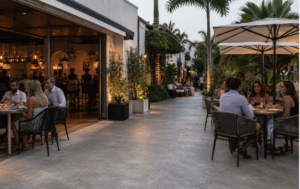
When a guest walks into a restaurant, the first impression begins long before the menu is opened, the server arrives, or the first plate hits the table. It starts at the entrance. It continues through the host stand, the dining room, the patio, the bar area, the restrooms, and every walkway in between. For Palm Beach restaurants, where style, atmosphere, cleanliness, and customer expectations are especially high, the condition of the floor can quietly shape how people feel about the entire dining experience.
That is why more restaurant owners are paying closer attention to concrete overlay. A worn floor, cracked surface, stained patio, or outdated tile can make even a great restaurant feel tired. On the other hand, a clean, polished, decorative surface can make the space feel modern, upscale, and intentionally designed. In a competitive dining market like Palm Beach, details matter. A restaurant does not need to be the most expensive place in town to look professional, inviting, and well cared for. It simply needs to make smart choices that improve how customers experience the space.
Restaurants throughout South Florida are constantly competing for attention, reservations, repeat visits, online reviews, and social media photos. Local dining guides such as The Palm Beaches restaurant and bar guide highlight just how broad and competitive the area’s food scene has become. From waterfront dining and casual cafés to upscale lounges and fine dining rooms, customers have options. A great first impression can be the difference between a one-time visit and a loyal customer.
The Floor Is Part of the Restaurant’s Brand
Restaurant branding is not just a logo, menu design, website, or sign out front. The physical space is part of the brand. The lighting, seating, music, wall finishes, table settings, and flooring all work together to tell customers what kind of experience they should expect. A Palm Beach restaurant with old, chipped, or stained floors may unintentionally send the wrong message, even if the food and service are excellent.
A concrete overlay gives restaurant owners a way to refresh the look of their floors without completely changing the identity of the space. It can be designed to look sleek and modern, warm and rustic, coastal and relaxed, or polished and upscale. This flexibility matters because Palm Beach restaurants are not all the same. A beachside seafood restaurant may want a different feel than a wine bar, steakhouse, café, hotel restaurant, or boutique bistro.
According to Wikipedia’s overview of Palm Beach, Florida, the town has long been associated with resort living, upscale shopping, historic architecture, and luxury hospitality. That history influences customer expectations. People visiting or living in Palm Beach often notice design details. They expect spaces to feel clean, attractive, and intentional. A floor that looks neglected can work against that expectation, while a well-designed concrete overlay can support it.
Concrete Overlay Can Help Create a Cleaner, More Updated Look
Cleanliness is one of the most important parts of a restaurant’s reputation. Customers may not know the technical details of flooring materials, but they do notice whether a space feels fresh, sanitary, and maintained. Old grout lines, cracked tile, stained concrete, peeling coatings, and uneven surfaces can make a dining room or patio feel less clean than it actually is.
Concrete overlay can create a smoother, more unified surface that looks cleaner and more professional. For restaurants, this can be valuable in both front-of-house and outdoor areas. Dining rooms, entranceways, patios, bar areas, and walkways all take a beating from constant foot traffic, spills, moisture, dropped utensils, moving chairs, and cleaning routines. Over time, even durable surfaces can start to look worn.
A professionally installed Palm Beach Concrete Overlay can help transform an existing surface into something more attractive and better aligned with the restaurant’s image. Instead of allowing cracked or outdated concrete to define the atmosphere, owners can use overlay as part of a larger visual upgrade.
Palm Beach Restaurants Compete in a Visual Dining Culture
Dining has become more visual than ever. Customers take photos of cocktails, brunch plates, desserts, dining rooms, patios, murals, table settings, and entryways. A restaurant’s design can become part of its marketing without the owner paying for an ad. When a guest posts a photo online, the background matters. Floors, walls, furniture, lighting, and overall atmosphere become part of the image.
Palm Beach restaurants are especially influenced by this visual culture because the area attracts residents, tourists, business travelers, seasonal visitors, and people looking for memorable experiences. Coverage from sources like Palm Beach Illustrated’s Food & Drink section shows how much attention the local dining scene receives. Restaurants are not only judged by food; they are judged by ambiance, presentation, and the feeling of the space.
Concrete overlay can contribute to that feeling. A decorative finish can make a patio look more polished, help an entryway feel more upscale, or give a casual dining room a more modern appearance. It can be subtle or dramatic depending on the concept. For restaurants that want more social media-friendly spaces, floors should not be treated as an afterthought.
A Better First Impression Can Influence Customer Confidence
Customers often make fast judgments. They may not say it out loud, but they notice when a restaurant looks worn down. If the floor looks damaged, they may wonder what else has been neglected. That may not be fair, but it is how first impressions work. A restaurant can have a talented chef, a great menu, and friendly service, but the environment still shapes trust.
This is especially important in a market where dining recommendations, online reviews, and local reputation can affect traffic. Restaurant pages and dining coverage on sites like Eater Miami’s Palm Beach section show how customers and food writers pay attention to what is new, notable, and worth visiting. A restaurant that looks updated has a better chance of feeling relevant.
Concrete overlay helps owners address one of the most visible parts of the property. Instead of replacing an entire slab or living with surfaces that no longer match the restaurant’s standards, overlay can provide a refreshed look that supports the brand. For a customer walking in for the first time, that can create a sense of confidence before the meal even begins.
Outdoor Dining Areas Need Special Attention in Palm Beach
Outdoor dining is a major part of the Palm Beach experience. Patios, courtyards, sidewalks, poolside restaurants, waterfront dining areas, and open-air lounges are part of what makes dining in South Florida appealing. However, outdoor surfaces also face sun, humidity, rain, salt air, furniture movement, foot traffic, and food and beverage spills.
A patio with cracked, stained, or uneven concrete can make an outdoor dining area feel less inviting. It can also create a mismatch between the restaurant’s atmosphere and the customer’s expectations. Guests may come for a beautiful meal in a beautiful setting, but if the flooring looks rough, the experience feels less polished.
The Downtown West Palm Beach dining district includes a wide variety of restaurants and dining experiences, showing how important walkable, attractive hospitality spaces are to the broader Palm Beach area. In these high-traffic environments, surfaces need to look good and hold up under constant use. A concrete overlay can help improve the appearance of patios and walkways while giving the restaurant a more cohesive look.
Concrete Overlay Can Support Renovations Without Changing Everything
Restaurant renovations can be expensive and disruptive. Owners often want a fresher look, but they cannot always afford to close for a long remodel or replace every design element. This is where concrete overlay becomes especially useful. It can help create a noticeable transformation without requiring a complete redesign.
A restaurant may keep its existing furniture, lighting, bar, and wall colors while upgrading the floor to tie everything together. In some cases, the flooring is the missing piece that makes the entire space feel more current. A decorative concrete finish can make older furniture look intentional again, help a patio feel more refined, or make a dining room look cleaner and more finished.
For Palm Beach restaurants, this matters because trends change. Customers notice when a space feels dated. A floor upgrade can help a restaurant keep up with the local hospitality scene without losing its personality. It is not always about becoming trendy. Sometimes it is about making the space feel cared for, current, and ready for customers.
Restaurant Surfaces Must Balance Beauty and Practicality
A restaurant floor cannot only look good. It also has to function. Restaurant floors deal with spills, grease, moisture, dropped items, rolling carts, heavy foot traffic, and frequent cleaning. Owners must think about appearance, durability, maintenance, and safety. A beautiful floor that is hard to maintain can quickly become a problem.
Concrete overlay gives owners design flexibility while still focusing on practical use. Depending on the finish and application, it can be used to create surfaces that are attractive and easier to visually maintain than older, damaged concrete or tile. For restaurant owners, that balance matters. They need spaces that photograph well, welcome customers, and stand up to everyday business.
Food safety and cleanliness are also part of the larger restaurant environment. Official resources such as the Florida Department of Health’s inspection and complaint information remind restaurant owners how closely food service environments are monitored. While flooring is only one part of a restaurant’s overall operation, cleanable and well-maintained surfaces contribute to the customer’s perception of professionalism.
First Impressions Affect Reviews, Referrals, and Repeat Visits
Many restaurant owners focus heavily on food quality and service, which are obviously essential. However, the physical environment can affect how customers describe the experience afterward. A guest may say the food was good, but the place looked old. They may say the patio was nice, but the floors looked dirty. They may say they liked the meal, but the restaurant did not feel worth the price.
Those comments matter. They can show up in online reviews, private conversations, social media captions, and local recommendations. A concrete overlay will not replace good food or service, but it can remove a visual weakness that hurts the overall impression.
When the flooring looks clean, modern, and aligned with the restaurant’s concept, customers are more likely to feel that the business is well managed. That feeling can support stronger reviews, better photos, more referrals, and more confidence in the dining experience. In a place like Palm Beach, where atmosphere is part of the value, this can make a meaningful difference.
Concrete Overlay Can Help Restaurants Look More Upscale
Not every Palm Beach restaurant is trying to be formal or expensive. However, nearly every restaurant wants to look worth visiting. Concrete overlay can help create a more upscale appearance without making the space feel stiff or overdone. It can be customized to fit the restaurant’s personality, whether the goal is elegant, coastal, industrial, modern, Mediterranean, tropical, or classic.
A polished or decorative floor can make the entrance feel more impressive. It can help the bar area look more refined. It can make outdoor dining feel more finished. It can also help older properties compete with newer restaurants that were designed with modern finishes from the beginning.
The Palm Beach dining scene is constantly being watched by locals, visitors, lifestyle publications, and food-focused media. Restaurant owners who invest in appearance are not simply decorating. They are protecting the way people perceive the business.
Conclusion: Smart Restaurants Know the Details Matter
Palm Beach restaurants operate in a market where customers expect more than a meal. They expect atmosphere, cleanliness, comfort, and a memorable experience. The floor may not be the first thing owners think about when improving a restaurant, but it is one of the first things customers see and feel. It affects the entrance, the dining room, the patio, the bar, and the overall impression of the business.
Concrete overlay gives restaurant owners a practical way to refresh worn surfaces, improve visual appeal, and create a more professional environment. It can support branding, improve the look of high-traffic areas, and help a restaurant feel cleaner, newer, and more intentional. For Palm Beach restaurants competing in a stylish and highly visible dining market, that first impression matters.
Smart restaurant owners understand that customers notice details. They notice the lighting, the seating, the service, the menu, and the condition of the space. A beautiful concrete overlay can help make sure the first impression is working for the restaurant, not against it.