
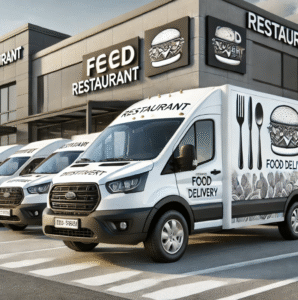
Running a restaurant today often means running a small transportation operation, too—catering vans, manager vehicles, supply shuttles, or branded delivery cars. When one of those vehicles is in a collision, even after repairs, it usually isn’t worth what it was the day before the crash. That post-repair loss in market value is called diminished value (DV)—and documenting it with a professional appraisal can mean real money back to your business and better protection for your brand.
What is Diminished Value—and Why It Matters to Restaurants
Diminished value is the measurable difference between a vehicle’s pre-loss market value and its post-repair market value. Even with quality, OEM-spec repairs, a vehicle with a recorded accident typically sells or trades for less than a comparable accident-free unit. For restaurants that operate multiple vehicles, that gap compounds across the fleet and across time.
Three realities make DV especially relevant for operators:
-
Fleet vehicles are business assets, not just transportation. They’re part of your ROI equation—affecting cash flow, collateral value, and future replacement cycles.
-
Accident history follows the VIN. Vehicle history databases and dealer systems surface collisions at trade-in, reducing offers regardless of repair quality.
-
Brand optics matter. Customers, partners, and potential franchisees often see your vehicles first; value erosion is not only financial—it’s reputational.
The Restaurant Landscape: Delivery, Liability, and Cost Pressures
Off-premise and last-mile logistics aren’t going away. In fact, many restaurants are experimenting with mixed models—outsourced couriers plus in-house fleets—to protect margins and guest experience. Nation’s Restaurant News notes software and new operating models are enabling more brands to stand up dedicated delivery capabilities, changing the calculus between third-party and first-party fleets. Nation’s Restaurant News
At the same time, operators are grappling with insurance and labor dynamics that directly affect vehicle strategy. Restaurant Business has reported examples of restaurants retreating from large in-house fleets in part due to high insurance costs—reminding us how vehicle risk directly touches the P&L. Restaurant Business Online And as laws, platforms, and delivery economics shift, restaurants continue re-evaluating their delivery stack to balance cost, control, and liability. NRN’s coverage of hybrid and tech-enabled delivery models shows how fluid this space is for operators planning capital and risk. Nation’s Restaurant News+1
In this environment, every dollar of asset value matters—which is exactly why a DV appraisal belongs in your incident-response playbook.
Five Revenue-Grade Reasons to Order a Diminished Value Appraisal After a Crash
1) It Converts Hidden Loss into a Recoverable Claim 💵
When another party is at fault, you can often pursue diminished value from that party’s insurer (state rules vary). Without a professional appraisal that quantifies pre-loss value, post-repair value, repair quality, and market comp adjustments, you’re guessing—and insurers will default to lower numbers or none at all. A DV report gives your risk manager or counsel a defensible anchor to negotiate from.
2) It Protects Your Future Trade-In and Lease Position 🔁
Dealers and fleet lessors discount vehicles with accident histories—sometimes significantly. The haircut can land months (or years) after the collision, when you’re refreshing the vehicle. A DV appraisal contemporaneous with the repair creates a dated, expert record you can use later when a buyer attempts an exaggerated discount. It’s much harder to reconstruct value evidence years after the fact.
3) It Supports Tighter Capital Planning and Replacement Cycles 📊
Fleet refresh timing is already a juggling act—balancing depreciation, maintenance, and financing. Knowing the true market value post-repair lets you make smarter hold-versus-replace decisions and prevents unplanned equity gaps when you roll a vehicle into your next unit.
4) It Reinforces Brand Standards and Guest Perception ⭐
A visibly damaged or poorly repaired vehicle undermines trust—especially in catering or premium casual concepts. While a DV appraisal is primarily financial, the process forces careful documentation: paint-meter readings, frame specifications, OEM repair confirmations, and before/after photography. Those records help you enforce quality with repairers and maintain brand consistency.
5) It Speaks the Insurer’s Language (and Saves Time) ⏱️
A professional DV appraisal packages valuation methodology, comps, and market adjustments the way claims professionals expect to see them. That shortens back-and-forth, reduces the chance of arbitrary denials, and helps your team close claims faster so managers can get back to operations.
Where DV Fits in Your Restaurant Risk & Operations Playbook
Before an incident
-
Maintain up-to-date photos and condition reports of your fleet (inside and out).
-
Record options, packages, and mileage regularly.
-
Keep proof of OEM-approved accessories (e.g., refrigeration units or wrap invoices).
Right after a crash
-
Prioritize safety and incident reporting.
-
Choose a repairer who documents every step with photos and OEM procedure references.
-
As soon as repairs are complete (and quality-checked), engage an independent DV appraiser to quantify loss.
-
If the other driver is liable, your appraiser’s report becomes your negotiation foundation with their carrier; if not, the report still informs future trade-in strategy and internal cost accounting.
When refreshing the fleet
-
Attach the DV report to your trade package.
-
If a dealer attempts an excessive “accident deduction,” counter with the documented, dated DV findings and repair documentation.
-
Track realized vs. appraised DV over time to refine reserve assumptions.
“We Use Third-Party Delivery—Do We Still Need This?”
Many restaurants use third-party marketplaces or white-label logistics. But plenty still operate manager vehicles, catering vans, and branded cars for events and VIP deliveries. Restaurant Business and NRN coverage show how operators constantly rebalance first-party and third-party delivery; even brands that lean on aggregators often retain some vehicles for control or guest experience. Restaurant Business Online+1 If a vehicle carrying your brand is involved in a collision, your balance sheet and your brand feel it. A DV appraisal remains relevant regardless of whether delivery is your primary channel.
Common Questions from Operators
Is a DV appraisal “legal” or just a negotiating tool?
It’s a recognized valuation practice used to quantify a specific category of loss. Whether (and how) it’s paid depends on state law, fault, and policy language. That’s why you want a report prepared to professional standards and, where appropriate, coordinated with counsel.
What if repairs were perfect?
Even flawless repairs don’t erase accident history; vehicle-history databases still flag the VIN, and market behavior reflects that stigma. DV appraisals account for repair quality but also for how the wider market prices accident history.
Can I recover DV on leased vehicles?
Often, yes—because the lessor (or you, depending on the agreement) will be hit with a diminished end-of-term value. A DV appraisal today can offset tomorrow’s lease-end charges or support a claim now. Check your lease terms and talk to counsel.
What documentation should my appraiser review?
Repair invoices, parts lists (OEM vs. aftermarket), frame measurements, paint-meter readings, pre- and post-scans, alignment specs, pre-loss photos, and any calibration documentation for ADAS (driver-assistance) systems.
The Restaurant News Angle: Why DV is Timely for Operators
Industry coverage underscores how off-premise volumes, tech shifts, and cost pressures keep transportation risk squarely on a restaurant’s radar. Nation’s Restaurant News has followed operators experimenting with delivery tech and centralized models; those shifts highlight why keeping tight control over asset value is smart, especially when vehicles are part of differentiated guest experience. Nation’s Restaurant News Restaurant Business has chronicled operators trimming or reshaping fleets in response to insurance and cost pressures—proof that vehicle economics can move strategy. Restaurant Business Online And Restaurant Dive’s reporting on the long-running delivery debate demonstrates how logistics decisions reverberate across profitability and risk—factors intertwined with your fleet’s retained value. Restaurant Dive
To go deeper into broader industry context and trends affecting restaurant operations and cost structures, you can also explore these authoritative Restaurant News resources (all respected trade outlets):
(Each outlet regularly covers delivery, liability, operations, and cost trends relevant to fleet decisions.)
How to Select a Diminished Value Appraiser for Restaurant Fleets
-
Fleet experience: Ask for examples with commercial or branded vehicles, not just personal autos.
-
Methodology transparency: The report should explain comps, adjustments for accident history, regional market effects, and repair-quality considerations.
-
Turnaround time: DV is most persuasive when documented soon after repairs and quality checks.
-
Court-ready reporting: If negotiations stall, you’ll want a report that stands up to scrutiny.
-
Multi-vehicle efficiency: If multiple units were damaged in the same incident (e.g., a lot event), choose an appraiser who can standardize documentation and pricing across VINs.
Practical Tips to Reduce Future Diminished Value
-
Use OEM parts when feasible to minimize market stigma and ensure repair consistency.
-
Keep meticulous records—pre-loss photos, mileage logs, and maintenance entries.
-
Install and maintain ADAS calibrations after repairs; documentation helps both safety and valuation.
-
Refresh wraps professionally after body work; poor wrap seam alignment can signal “bad repair,” magnifying perceived loss.
-
Pre-negotiate with preferred repair partners for detailed documentation and photo sets on every repair.
The Bottom Line for Restaurant Operators 🍽️➡️📈
If a branded vehicle is involved in a collision, the value you lose after repairs is real—and it’s often recoverable. A diminished value appraisal transforms that hidden loss into a documented number you can use to negotiate with insurers, protect your trade-ins and lease-end outcomes, plan capital more accurately, and maintain brand standards in a market where vehicles are part of the guest experience. With delivery models evolving and cost pressures unrelenting—issues covered frequently by Nation’s Restaurant News, Restaurant Business, and Restaurant Dive—it’s smart business to make DV appraisals a standard step in your incident-response checklist.
Conclusion
Restaurants don’t just serve meals—they manage mobile brand ambassadors on wheels. After a collision, a vehicle can be mechanically sound yet financially wounded. By ordering a professional diminished value appraisal, you protect your balance sheet, your replacement cycle, and your brand. The next time one of your fleet vehicles is hit, don’t leave money—and reputation—on the table. Document the loss, present the facts, and recover what’s yours.