Restaurants, Retention, and Retirement: Why Smart Operators Partner With a Medicare Advisors Group

Restaurant News for Medicare Advisors Group

Running a restaurant means living in the real world of tight margins, unpredictable demand, and constant staffing pressure. The industry has been clear about what’s squeezing operators right now: labor costs, recruiting and retention, and rising overhead that never seems to slow down.

In that environment, most restaurant leaders look for advantages where others aren’t paying attention. One of the most overlooked leverage points is benefit guidance for owners, managers, and long-tenured staff who are approaching Medicare age—or already eligible and confused by options. Working with a Medicare Advisors Group gives restaurants a practical way to reduce stress, protect leadership continuity, and strengthen retention with a support system that feels personal, not corporate. ✅🙂

The Restaurant Workforce Is Changing, and Benefits Have Become a Retention Tool

Restaurants have been fighting for stability since the pandemic era reshaped the workforce, and the “labor problem” did not simply vanish. Even as hiring improves compared to the worst years, the cost of labor has climbed materially in recent years, creating an ongoing need to keep good people longer and reduce churn.

Across the industry, operators have responded by improving benefits—because compensation alone is not always enough to keep experienced staff from walking. QSR coverage has highlighted how brands adjust pay scales and benefits to retain talent in a tight market.

That matters for restaurants for a simple reason: the most expensive employee is the one you keep replacing. Turnover drains training time, consistency, culture, and guest experience. When you help your people make sense of healthcare transitions—especially Medicare—you reduce a major life stressor at the exact moment many experienced team members consider leaving the workforce or cutting hours.

Medicare Moments Hit Restaurants Harder Than Most Businesses

Restaurants are full of “long-game” employees: the manager who’s been with you for 12 years, the line cook who knows your kitchen better than anyone, the bookkeeper who keeps everything from unraveling, the owner-operator who still jumps on expo when it gets slammed.

When Medicare eligibility comes into play, the decision is rarely simple. Timing matters. Enrollment windows matter. Coverage choices affect prescriptions, doctors, travel, and monthly costs. If a key person gets overwhelmed, they may retire sooner than planned, reduce hours abruptly, or make a rushed coverage decision that creates financial stress.

A Medicare-focused advisory firm exists for this exact purpose. Medicare Advisors Group describes its work as helping people understand Medicare options and choose coverage that fits their needs.

For restaurant operators, the value is not theoretical. It shows up in fewer distractions, less last-minute schedule disruption, and more confidence among your most experienced people.

A Medicare Advisors Group Reduces Risk and Confusion During Coverage Transitions

Restaurants already deal with compliance complexity around healthcare and workforce administration. Industry coverage has long noted how confusing health coverage decisions can be for operators and employees, especially as rules and options evolve.

Medicare adds another layer—often at the leadership level. Owners and senior managers are making decisions that can impact family coverage, business finances, and retirement timing. An advisor helps by translating a complicated system into a clear path, with real deadlines, next steps, and plan comparisons.

This matters in restaurants because operational risk is personal. If a key person is mentally consumed by healthcare paperwork or worried about making the wrong choice, it bleeds into performance, communication, and decision-making. Restaurants need leaders who are present.

Better Support for Aging Owners and Managers Protects Business Continuity

The restaurant industry has no shortage of stories where a business falters during an ownership or leadership transition. A Medicare decision can quietly become part of that story if the owner delays planning, gets hit with unexpected costs, or realizes too late that their coverage situation is forcing a different retirement timeline.

Medicare planning is not only an employee issue—it is an owner stability issue.

Partnering with a Medicare Advisors Group creates a “ready when needed” resource. When the owner, partner, or GM reaches that life stage, there is already a trusted place to go for guidance. That reduces reactive decision-making and supports smoother handoffs, steadier planning, and fewer operational surprises.

It Supports Retention Without Turning Benefits Into a Budget Explosion

Not every restaurant can afford to expand group health coverage, and many restaurants use creative approaches—private exchanges, alternate models, or different benefit structures to control cost while still offering something meaningful. Nation’s Restaurant News has covered how restaurants explore options like private exchanges to manage healthcare coverage challenges.

Medicare guidance fits neatly into this reality. It does not require a restaurant to rebuild its entire benefits program. It adds a high-value support layer for the people who need it most, at the moment it matters most.

Even if a restaurant does offer health coverage, Medicare eligibility can shift the equation for certain team members. Clear guidance can prevent coverage gaps and avoid confusion about how different coverage types interact.

It Strengthens Culture by Showing Real, Human Care

Restaurant culture is built in the small moments: how you handle someone’s family emergency, whether you train with patience, whether you notice when a great employee is carrying stress.

Healthcare confusion is stress. Medicare confusion is a special category of stress because the consequences feel high, the rules feel unfamiliar, and the timeline feels unforgiving.

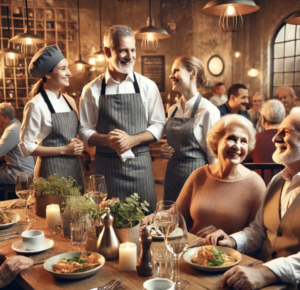
Providing access to a Medicare Advisors Group communicates something powerful: this restaurant takes care of people through real-life transitions, not just during the Friday dinner rush. That kind of care builds loyalty—and loyalty is a business advantage in an industry where consistency wins.

It Helps Restaurants Compete as Healthcare Costs and Pressure Rise

Healthcare pressure is not easing across the broader employer landscape, and restaurant coverage continues to track the strain operators feel. QSR reporting has specifically highlighted rising healthcare costs and the pressure group insurance can place on restaurant owners.

When costs rise, smart operators look for targeted solutions that protect their team and their financial stability. Medicare guidance is targeted. It supports the segment of your workforce that is most likely to be navigating complex healthcare decisions, often while they hold some of the most valuable institutional knowledge in your building.

It Can Improve Financial Wellness for Hourly Teams With Long Tenure

The restaurant industry increasingly discusses financial wellness, not just wages. QSR has covered financial wellness for hourly workers and how benefits and stability connect to employee wellbeing and retention.

Medicare is part of that wellness story for long-tenured hourly workers who are approaching retirement age. Many are careful planners, and many are anxious planners. A trusted advisor can turn uncertainty into clarity, helping them choose coverage confidently and avoid costly mistakes.

That does something subtle but important: it helps a seasoned team member stay focused at work because they are not carrying an invisible burden outside of work.

Conclusion

Restaurants win when leadership is stable, experienced staff stick around, and the business runs without unnecessary surprises. The industry data points to ongoing cost pressure—especially labor—and the operators who thrive are the ones who build systems that reduce churn, strengthen loyalty, and protect continuity.

Working with a Medicare Advisors Group is one of those systems. It supports the people who keep your restaurant steady—owners, managers, and long-tenured team members—through a major life transition that can otherwise create confusion, stress, and premature exit from the workforce. It adds clarity without demanding a massive benefits overhaul, and it reinforces a culture of care that employees feel, remember, and often repay with loyalty. 🍽️💛

Authority links (restaurant-industry related) used in this article:
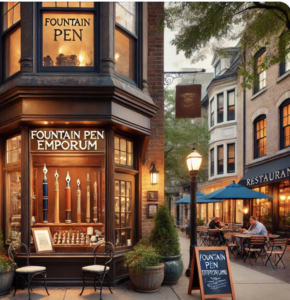
Ink, Appetite, and Foot Traffic: Why a Fountain Pen Shop Thrives Beside a Restaurant ✒️🍽️

Restaurant News for Fountain Pen Shop Near Me

A fountain pen shop is built on the art of slowing down. People step inside to feel paper texture, test nibs, compare inks under warm light, and enjoy the small luxury of choosing something personal. A restaurant next door is built on the same human truth: people gather, linger, and treat themselves. When these two businesses sit side-by-side, the relationship becomes more than convenient real estate. It becomes a shared ecosystem where timing, mood, and experience work together to create more visits, longer dwell time, stronger community presence, and better sales for the pen shop.

Placing a fountain pen shop next to a restaurant blends two “destination” experiences into one outing. The pen shop benefits from the restaurant’s steady stream of guests, while the restaurant benefits from an adjacent retail experience that feels elevated and memorable. Together, they turn a simple errand into a mini event, and that shift is where the magic happens. ✨

Built-In Foot Traffic That Feels Natural, Not Forced 🚶‍♀️🚶‍♂️

Restaurants produce reliable waves of traffic across lunch, dinner, and weekend peaks. That rhythm is valuable because a specialty retail store does not always generate constant walk-ins on its own. A fountain pen shop thrives when people have time to browse, and restaurant visits often include arrival gaps, waiting lists, and post-meal strolling. Those “in-between” moments become perfect windows for discovery.

Being next door places the pen shop directly in the path of guests who are already in a spending mindset. Dining out is discretionary, experiential, and emotionally driven. The guest has already decided that today is worth a little extra, and that mindset translates beautifully to a pen purchase, ink bottle, notebook, or gift card. That kind of adjacent traffic is especially powerful when it comes from the kind of diners who pay attention to craftsmanship and detail, a core overlap with fountain pen buyers. Industry coverage frequently emphasizes how restaurants compete on experience and differentiation, and that experience-driven consumer behavior carries into nearby retail. Nation’s Restaurant News often frames the modern restaurant landscape around experience, consumer preferences, and brand identity.

A Longer, Happier Dwell Time That Boosts Browsing ⏳🙂

Fountain pen shopping is rarely a five-minute sprint. People want to test lines, compare nib widths, sample inks, and talk through use cases. Restaurant adjacency naturally increases dwell time in the neighborhood. Guests arrive early for reservations, wait for tables, or linger after dessert. That slow, relaxed tempo is exactly what a pen shop wants, because browsing is where attachments form and higher-value purchases happen.

The emotional arc matters, too. A good meal leaves people content, unhurried, and open to small indulgences. That post-meal glow can turn a casual walk-in into a meaningful purchase, especially with items that feel celebratory: a first “real” fountain pen, a new journal for the new year, or a special ink that matches a personal aesthetic. Restaurant industry reporting often highlights how value is not only about price, but also about the feeling guests get from the experience. Restaurant Business regularly covers how restaurants signal value and build loyalty through experience, which is the same psychological terrain that supports specialty retail add-ons next door.

Shared “Occasion Energy” Creates More Gift Sales 🎁✨

Restaurants are magnets for occasions: birthdays, anniversaries, promotions, first dates, reunions, and client dinners. Those occasions create last-minute gift needs, and fountain pens are unusually well suited for meaningful gifting. A pen is practical, personal, and symbolic. It says celebration, commitment, and taste without needing to be loud.

When a fountain pen shop is next to a restaurant, it becomes an easy add-on for the guest who wants to elevate the moment. A person can pick up a pen and have it wrapped before dinner, or walk in after the meal and choose a gift that matches the emotional tone of the evening. That proximity reduces friction and increases conversion because the guest is already present, already spending, and already thinking in “special moment” terms. Restaurant-focused journalism frequently notes how dining occasions drive ancillary purchases and brand attachment. Restaurant Dive covers how consumer trends shape restaurant behaviors and spending patterns, and those patterns spill over into nearby retail.

Cross-Promotions That Feel Premium Instead of Pushy 🤝🍝

A fountain pen shop and a restaurant can collaborate in ways that feel classy and natural. Simple partnerships can drive measurable results without cheapening either brand:

  • A dinner receipt that offers a small perk at the pen shop, such as a complimentary ink sample card with any purchase.

  • A pen shop card that offers a dessert add-on or coffee upgrade at the restaurant.

  • A monthly “Write Night” where guests enjoy a fixed-price menu next door and then attend a handwriting or journaling mini-session at the shop.

  • A special edition menu insert featuring handwritten notes and the story behind the ink used.

These collaborations work best when they are framed as hospitality rather than discounts. The restaurant gives a taste of generosity; the pen shop gives a sense of artistry. Both businesses win by creating a shared destination identity that feels curated. Coverage of branding and marketing in the restaurant world often stresses how partnerships and storytelling deepen loyalty. QSR Magazine frequently explores how concepts build repeat traffic through brand experience and marketing, and those principles apply strongly to local collaborations too.

A Neighborhood Becomes a “Third Place” for Conversation and Community 🏙️🖋️

Fountain pen culture thrives on community: collectors comparing nib grinds, beginners learning ink properties, and journalers talking paper weight. Restaurants also thrive on community: regulars, staff relationships, and familiar routines. Together, they can turn a block into a beloved micro-district, a place people return to because it feels like them.

When the pen shop is adjacent to a restaurant, it becomes easier to host events that stick. People can make an evening out of it, and attendance rises when the outing includes food. That matters because events are not only marketing; they create belonging, and belonging creates loyalty. A pen shop with a strong community tends to see higher repeat visits and more word-of-mouth referrals, and the restaurant adjacency makes community-building far easier.

From a broader perspective, restaurants are central to the identity of what many people call a “restaurant” experience, and the classic definition itself emphasizes public gathering and service. Wikipedia’s article on restaurants provides that baseline context, and it helps highlight why restaurant-adjacent retail can flourish: restaurants exist to host people, and hosted people explore.

Better Timing Windows Across the Day, Not Just One Rush 🕰️🍜

A fountain pen shop can leverage restaurant-driven patterns across multiple dayparts:

  • Lunch traffic brings professionals, students, and people on errands.

  • Dinner traffic brings couples, families, and celebratory groups.

  • Weekend brunch traffic brings browsers with time and curiosity.

This diversity matters because fountain pens sell across life stages and purposes: business signing, note-taking, journaling, creative writing, sketching, and collecting. A restaurant next door brings a wider range of customer profiles into the immediate area, increasing the odds of new-market discovery. Industry coverage of quick-service, fast casual, and full-service trends shows how restaurants evolve to match daypart needs, and that daypart energy supports neighboring businesses. QSR Media is one example of an outlet that covers restaurant industry movement across formats and consumer habits.

A Stronger Local Identity That Makes Both Businesses More Memorable 🌿🏷️

A fountain pen shop next to a restaurant creates a story people repeat. It becomes “that little place where we ate and then picked out the prettiest ink” or “the date night where we found the perfect pen.” That memory is powerful because it turns a location into a ritual.

Ritual is marketing that does not expire. It brings people back. It increases recommendations. It makes tourists remember the block. It gives locals a reason to bring out-of-town guests. When a pen shop and a restaurant coordinate even lightly on aesthetics, signage, and event calendars, the neighborhood feels intentional, and intentional places attract return visits.

Restaurant journalism repeatedly underscores how competition is intense and differentiation matters, and the same is true for specialty retail. Pairing two complementary experiences strengthens differentiation for both. Nation’s Restaurant News and similar outlets focus heavily on what makes brands stand out, and that lens applies beautifully at the local level.

Conclusion: A Shared Experience Converts Better Than a Standalone Destination 🖊️🍽️✨

A fountain pen shop near me located next to a restaurant benefits from more than foot traffic. It benefits from timing, emotion, dwell time, occasions, and the natural human desire to make an outing feel complete. The restaurant brings people who are ready to enjoy themselves; the pen shop gives those people a chance to take something meaningful home. Together, they create a small district of pleasure and craftsmanship where the experience is the product.

When ink and appetite live side-by-side, the result is a neighborhood that feels slower, richer, and more memorable. That is exactly the kind of environment where a fountain pen shop can grow from a niche retail space into a local landmark. ✒️💛

Why Every Restaurant Should Use a 15 Amp Circuit Breaker ⚡

Restaurant News for 15 amp circuit breaker

Operating a restaurant means juggling a myriad of tasks — from maintaining food safety and staff training to keeping equipment running smoothly and delivering consistently exceptional guest experiences. One often-overlooked area that has profound implications for safety, reliability, and regulatory compliance is the electrical system. In particular, ensuring that certain branch circuits are protected with a properly sized 15 amp circuit breaker is a decision that can play a key role in a restaurant’s operational integrity and risk management. This article delves into why a restaurant should use a 15 amp circuit breaker for specific circuits, and how that choice supports safe, efficient, and compliant operations.


Why a 15 Amp Circuit Breaker Matters


In a commercial kitchen or full-service restaurant environment, the electrical load can be extensive: refrigeration units, prep equipment, lighting, HVAC, point-of-sale systems, and more. When circuits are overloaded, or when the breaker is not properly sized, serious risks emerge — equipment failures, tripped circuits, or even fire hazards. According to industry guidance, circuit breakers in commercial applications must be sized appropriately relative to the continuous load, and must meet code requirements for branch circuits. Circuit Breaker Superstore+1
Using a 15 amp breaker on moderately loaded circuits helps to:

  • Limit the maximum current draw to a known threshold (typically at 120 V that’s 15 amps, meaning about 1,800 watts under full load)

  • Simplify circuit design and load calculation

  • Provide a clear and rigid boundary for smaller appliances and outlets

  • Facilitate compliance with certain portions of the code and safety standards

By deliberately allocating 15 amp circuits for specific loads (for example, small appliances, service outlets, lighting in a non-heavy duty zone), a restaurant can better tailor its electrical infrastructure to match both practical usage and safety protocols.


Appropriate Uses of a 15 Amp Circuit Breaker in a Restaurant


When designing or evaluating a restaurant’s electrical system, it’s critical to differentiate between heavy-duty loads (such as ovens, large refrigeration units, dishwashers) and lighter loads (such as tabletop lighting, low-draw outlets, small prep equipment). The heavier loads may require dedicated circuits with much higher ampacity (e.g., 20 amp, 30 amp, 50 amp, or even 208/240 V service). ACityDiscount+1
For the lighter loads, a 15 amp circuit breaker is often entirely appropriate. For example:

  • Guest area lighting, decorative fixtures, or ambient lighting circuits

  • Service area outlets for laptops, POS systems, or small low-draw equipment

  • Secondary circuits for minor prep equipment that doesn’t create a heavy continuous load
    By using a 15 amp breaker for these roles, the restaurant ensures that each circuit remains within a safe ceiling of current draw, and minimizes the risk of incidental overloading or nuisance tripping during peak service times.


Safety and Compliance – The Role of Proper Breaker Sizing


Beyond day-to-day operations, restaurants must meet code mandates and safety expectations. The nationally recognized standard in the United States, the National Electrical Code (NEC), defines the requirements for branch circuits and over-current protection devices (like circuit breakers). Wikipedia+1
For example, branch circuits supplying continuous loads (those expected to run for three hours or longer) must be sized at 125 % of the continuous load. Circuit Breaker Superstore While many restaurant loads are heavy and require higher‐amp circuits, using a 15 amp breaker for smaller loads ensures proper matching of breaker capacity to expected draw.
Additionally, restaurants are exposed to unique risks — from grease and moisture in the kitchen environment to high‐volume usage and varied equipment. An article on electrical hazards in restaurants emphasizes the need for outlets, panels and wiring to be properly installed, maintained and protected. DogWoodBar+1
When a breaker is properly sized (such as 15 amp), it helps protect wiring from overheating, helps prevent nuisance trips that interrupt service, and supports compliance with local codes and insurance requirements. Moreover, proper circuit sizing aids in mitigating fire risk in a high-energy environment like a restaurant kitchen. McDonalds Insurance Program+1


Operational Benefits for Restaurant Owners and Managers


From a business owner’s standpoint, selecting a 15 amp circuit breaker for designated circuits delivers several practical advantages:

  1. Reliability: Smaller, less-intensive loads run on their own circuits and are less likely to be impacted by heavier equipment cycling. This reduces downtime in guest areas, POS zones, or even back-of-house service zones.

  2. Easier Troubleshooting: When a circuit trips, it’s easier to identify what equipment is on a dedicated 15 A circuit than one overloaded with heterogeneous loads. This supports faster resolution and less service disruption.

  3. Cost Efficiency: While heavy-duty circuits require larger conductors, more robust breakers and possibly three-phase service, a 15 amp circuit uses standard wiring and standard breakers, making installation and maintenance more cost-effective.

  4. Maintenance and Upgrades: Having a clear framework where “light load” circuits use 15 amps enables restaurant facilities staff or contractors to plan additions or modifications more predictably — for example adding a USB charging station or new lighting in guest spaces without altering huge panels.

  5. Business Continuity Preparedness: A recent guide from the restaurant industry underscores that electrical disruptions can quickly become major operational crises. Restaurant News Resource By designing circuits intelligently — including those protected by 15 amp breakers for lower-demand loads — a restaurant is better positioned to isolate failures and maintain partial operations rather than a full shutdown.


Strategic Considerations and Best Practice Tips


While a 15 amp circuit breaker has many benefits for appropriate loads, it’s essential to apply strategic planning and best practice to make it work effectively in a restaurant environment:

  • Perform Load Calculations: Before assigning a 15 amp breaker, evaluate what equipment will be on that circuit now and what future additions might be planned. Avoid mixing light loads with potential heavier draws.

  • Label Circuits Clearly: Wiring and breaker panels should show which circuits are 15 amp versus higher‐capacity. This aids in maintenance and reduces risk of someone plugging heavy equipment into an undersized circuit.

  • Use Dedicated Circuits for Critical Equipment: Avoid placing key kitchen appliances (walk-in fridge, commercial ovens, hoods) on 15 amp circuits. These likely need 20–50 amp circuits, or even 208/240 V service. Kitchenall Restaurant Equipment+1

  • Ensure Regular Inspection and Maintenance: Even 15 amp circuits require monitoring — outlets should not be overloaded with power strips full of equipment, wiring should be in good condition, and panels should be free of excessive heat or signs of wear.

  • Coordinate with Local Code and AHJ: Though the NEC provides national baseline standards, local jurisdictions or fire authorities (Authority Having Jurisdiction—AHJ) may have additional rules for commercial kitchens or public dining facilities. MV Power Solutions

  • Plan for Future Growth or Equipment Changes: A lighting circuit that is fine today on 15 amps may not be sufficient if you plan to add heavy LED displays, heated seats, etc. Review future plans and adapt circuits accordingly.


Conclusion


In the fast-paced and highly demanding environment of a restaurant, every aspect of operations must be designed for reliability, safety, and efficiency. The decision to use a 15 amp circuit breaker for defined light-to-moderate loads is far from trivial — it shapes a facility’s electrical architecture, impacts its ability to stay operational during peak service, protects against fire and code violations, and supports business continuity.
By intentionally sizing and assigning a 15 amp circuit breaker to the right circuits, restaurant owners and facility managers unlock a layer of operational control and safety that benefits staff, guests, and the business as a whole. Embracing this level of planning is just one of the many smart moves that separate a well-run restaurant from one constantly reacting to equipment trips, power outages, or expensive electrical repairs. Let your circuits be as finely tuned as your service — and your guests will feel the difference.

Why Every Restaurant Needs a CPA to Thrive in Today’s Industry 🍽️

Restaurant News for C p a near me

Running a restaurant is equal parts passion, precision, and pressure. Behind every plate served and every customer delighted lies a business structure that’s constantly moving—inventory, payroll, vendor payments, sales tax, food costs, compliance, and cash flow. With margins among the thinnest in any industry, restaurants simply can’t afford financial guesswork. That’s why having a dedicated Certified Public Accountant (CPA) isn’t just a smart move. It’s the foundation of long-term survival and growth.

Restaurants today face rapid industry changes, rising labor costs, unpredictable supply chains, and shifting consumer expectations. Professional financial oversight may feel like a “nice-to-have,” but for restaurants that want to stay ahead, avoid costly mistakes, and build a scalable brand, a CPA becomes essential. Below is why every restaurant—whether a neighborhood diner, fine-dining establishment, bar, café, or multi-location chain—needs a CPA standing beside them.

The Financial Backbone Every Restaurant Requires

Restaurant owners are often creatives at heart, driven by serving great food and memorable experiences. But the reality of the business is rooted in numbers, federal and state compliance, tax filings, and strategic forecasting. Those numbers must be accurate. A CPA ensures they are.

From day one, a CPA helps restaurants set up proper accounting systems, ensure compliance with industry-specific regulations, create budgeting structures, and track performance trends. This gives restaurant owners the clarity they need to make informed decisions, cut unnecessary expenses, and maximize profitability.

Effective financial management isn’t reactive—it’s proactive. CPAs give restaurants the reliable, structured financial foundation that can support growth, withstand unexpected downturns, and fuel smart investment choices.

Improved Cash Flow, Cost Control, and Vendor Management

Cash flow is the heartbeat of every restaurant. It can determine whether a location thrives, expands, or closes its doors. With fluctuating food prices and variable labor needs, restaurants need precise tracking so they’re never caught off guard.

A CPA monitors cash flow patterns, identifies leaks, and predicts future needs so restaurants never end up short. They help owners understand true profit margins by analyzing food costs, beverage costs, and labor percentages with accuracy and context. No restaurant can rely on “gut feelings” when margins are tight. They need data, strategy, and oversight.

Vendor management is another crucial area. Errors in invoicing, duplicate charges, and inconsistent pricing happen more often than many realize. A CPA reviews vendor invoices, ensures accuracy, and identifies opportunities to renegotiate pricing—ensuring restaurants keep more of every dollar they earn.

Authoritative reading on industry cash flow trends can be found through Restaurant News sources such as Nation’s Restaurant News.

Tax Expertise That Saves Restaurants Thousands

Restaurant taxes aren’t simple. They include payroll taxes, sales taxes, tip reporting, depreciation, and sometimes multi-state filings. One mistake can cost thousands in penalties. A CPA protects restaurants from errors, missed deadlines, and compliance oversights.

They also ensure restaurants take advantage of tax credits and deductions designed specifically for the food and hospitality industry. These include:

• FICA tip credits
• Equipment depreciation
• Food waste deductions
• Startup cost deductions
• Employer incentives for hiring
• Energy-efficiency credits

Without a CPA who understands restaurant tax laws, many of these opportunities go unused.

Background knowledge on tax requirements for businesses can be explored through Wikipedia’s breakdown of business accounting at Wikipedia.

Accurate Payroll, Labor Compliance, and Tip Reporting

Payroll is one of the most complex areas for any restaurant. With hourly wages, overtime, shift differentials, and tipped income, IRS and Department of Labor compliance must be precise.

A CPA helps restaurants ensure:

• Accurate tip reporting
• Proper wage calculations
• Overtime compliance
• Updated payroll tax filings
• Correct classification of employees

Mistakes in payroll can lead to major penalties and even lawsuits. Restaurants that try to manage it all manually often find themselves overwhelmed or exposed.

Additionally, many restaurants now rely on modern scheduling platforms, delivery apps, and third-party service providers, each with their own reporting challenges. A CPA bridges that gap by ensuring systems align, numbers match, and records stay clean.

Industry updates on labor changes are often discussed in publications like Restaurant Business Online.

Cost-Saving Insights That Reduce Waste and Boost Margins

Restaurants lose more money to unseen inefficiencies than to major disasters. Food waste, over-portioning, theft, and purchasing errors slowly chip away at profits. But with the guidance of a CPA, restaurants gain visibility into these financial blind spots.

A CPA analyzes:

• Plate costs
• Menu profitability
• Inventory turnover
• Vendor contract accuracy
• Seasonality trends
• Price fluctuations in food categories

This allows restaurant owners to make strategic choices, such as adjusting menu pricing, removing low-profit items, optimizing portion sizes, and scheduling staff during the true peak times—not assumed ones.

CPAs turn raw data into actionable steps that significantly improve profitability.

Growth Planning and Forecasting for Expansion

Successful restaurants don’t grow by accident—they grow by understanding their numbers. A CPA provides projections, scenario planning, and financial models to help restaurants make bold but calculated decisions.

This includes:

• Multi-location expansion plans
• Equipment investments
• Remodeling budgets
• Marketing return on investment
• Seasonal forecasting
• New product rollouts

Whether a restaurant wants to add a second location or simply stay competitive during off-seasons, a CPA gives owners the confidence to move forward safely and strategically.

The broader financial landscape for restaurant growth is covered by resources like QSR Magazine.

Protection Against Financial Risk and Fraud

Restaurants handle high volumes of cash, credit card payments, and vendor invoices. This makes them vulnerable to internal theft, bookkeeping errors, or fraudulent charges that go unnoticed until it’s too late.

A CPA strengthens internal controls by reviewing:

• Point-of-sale reports
• Cash handling processes
• Inventory logs
• Vendor payments
• Bank reconciliations
• Schedule-to-sales ratios

Their oversight helps prevent financial discrepancies, reduces the likelihood of fraud, and ensures all accounting practices meet industry standards.

CPAs provide owners with peace of mind—something every restaurant needs in an industry known for unpredictability.

Conclusion: A CPA Is Not an Expense—It’s a Growth Partner 🍴

Restaurants operate in one of the most demanding and competitive industries. Great food and service are essential, but financial expertise is what keeps a restaurant alive long enough to build a legacy. A C p a near me supports every layer of the business—from tax strategy and payroll accuracy to cash flow stability and long-term planning.

When restaurants partner with a CPA, they gain clarity, consistency, and confidence. They protect their bottom line. They stay compliant. They uncover savings they didn’t know existed. Most importantly, they set themselves up to grow in a sustainable, scalable way.

Every successful restaurant has a great chef, a great manager, and a great accountant behind the scenes. A CPA isn’t just a financial advisor—they’re one of the strongest competitive advantages a restaurant can have.

Why Restaurants Benefit From Hiring A Student Rights Attorney 🍽️🎓

Restaurant News for Student Rights Attorney

Restaurants live and breathe on people. Guests fill the dining room, of course, but behind the scenes there is a constant flow of servers, hosts, line cooks, dishwashers, delivery drivers, and bartenders keeping everything moving. In the United States, a huge portion of that workforce is young and still in school. The restaurant industry has long relied on flexible, part time labor, which often means high school students, college students, and student interns.Wikipedia

At the same time, restaurant owners are operating in a fast changing environment. Labor laws evolve, campus rules shift, and social media can turn a small issue involving a student worker into a public relations storm. Trade publications like Nation’s Restaurant News regularly spotlight stories where workforce issues and brand reputation collide, emphasizing that labor decisions in restaurants rarely stay behind the kitchen door anymore.Wikipedia

In this climate, more restaurant operators are turning to a type of legal partner that may sound unusual at first glance: a Student Rights Attorney. This is an attorney who understands both employment law and the unique legal and practical realities of students. For restaurants that regularly hire students or operate near campuses, this relationship becomes a strategic way to protect the business, support young staff, and safeguard the brand. 🌟

Student Workers Sit At The Center Of Restaurant Labor

Restaurants form one of the largest private employers in the country, and many jobs in this sector are entry level positions ideal for students who need flexible hours.Wikipedia These roles introduce young people to the workforce, sometimes as their very first job. That first job experience can shape how they see employers, professionalism, and their own future.

When a restaurant hires students, it is not simply hiring extra hands. It is stepping into a complex mix of employment laws, school policies, and parental expectations. Student workers often juggle class schedules, extracurricular commitments, and sometimes campus housing rules. A Student Rights Attorney understands how these different worlds intersect. This attorney can help a restaurant design job descriptions, scheduling policies, and handbook language that respects student obligations while staying compliant with federal and state labor standards, including rules on minors, overtime, and required breaks.

By thinking of student hires as a distinct group with specific needs instead of just another part time slot to fill, a restaurant positions itself for fewer conflicts and more loyalty from young staff. That shift benefits retention, service quality, and ultimately profitability.

Navigating Wage, Scheduling, And Compliance For Student Employees

Labor compliance is already complicated for restaurants even before student issues enter the picture. Industry outlets like Restaurant Business Online regularly cover topics such as wage pressures, scheduling rules, and tipping policies that can directly influence a restaurant’s margins.Restaurant Business Online When a large portion of the staff is made up of students, the risk of unintentional violations increases.

A Student Rights Attorney helps a restaurant shape policies that respect both employment laws and the limitations students face. This includes guidance on how to:

  • Structure shifts so that younger employees are not working hour patterns that conflict with child labor laws or school requirements.

  • Document student availability in a way that protects the restaurant if disputes arise about missed shifts or academic conflicts.

  • Implement fair, transparent policies around tipped wages, tip pooling, and training time, since young workers are often less familiar with what the law entitles them to receive.

The attorney can also review contracts or partnership agreements with universities, culinary schools, or student internship programs. Clear documentation and strong legal footing prevent misunderstandings that might otherwise escalate into complaints, audits, or lawsuits.

Creating Safer, More Inclusive Workplaces For Young Staff

Restaurants are high pressure environments. Busy shifts, rotating managers, and a mix of full time and part time employees create conditions where harassment, discrimination, or bullying sometimes slip through the cracks. For young workers still learning their rights and boundaries, these issues can feel intimidating or confusing.

A Student Rights Attorney brings a protective lens to this reality. They help restaurant owners craft anti harassment and anti discrimination policies tailored to young employees, including specific language about age, gender identity, sexual orientation, disability, and student status. The attorney can assist in developing clear reporting channels that feel safe for student workers, including anonymous complaint options, and can outline consistent investigation procedures that shield both the complainant and the restaurant itself.

When a restaurant treats student safety and dignity as a non negotiable value, it builds a stronger culture. That culture reduces turnover, lowers the risk of legal claims, and often increases service quality because staff feel respected and supported. 💬

Reducing Risk Around Campus Partnerships And Promotions

Many restaurants build their entire concept around the student demographic. Campus adjacent cafĂŠs, quick service chains near universities, and full service restaurants in college towns run student promotions, host campus group events, and sometimes participate in student organization sponsorships. Trade outlets such as Restaurant News regularly feature coverage of restaurant marketing efforts that target local communities, including college markets.RestaurantNews.com

These relationships are valuable and profitable, yet they also create unique legal risks. Issues can arise over:

  • Student discount campaigns that inadvertently discriminate against non students.

  • Sponsored events where alcohol is served and underage attendees are present.

  • Meal plan arrangements or exclusive agreements with campus housing that raise contract or antitrust concerns.

  • Social media promotions that use student images without proper consent.

A Student Rights Attorney helps restaurants design campaigns and partnerships that respect student rights while still achieving marketing goals. This attorney reviews promotional language, consent forms, and collaboration agreements with student groups or schools. The result is a public facing strategy that energizes the student community without opening the door to avoidable legal trouble.

Preparing For Investigations, Complaints, And Public Scrutiny

In the digital age, a single complaint from a student worker or student guest can quickly move from an internal matter to an online story that draws intense attention. Restaurant focused outlets like Restaurant Business Online and Nation’s Restaurant News demonstrate how fast labor controversies, discrimination claims, or safety incidents can travel once they hit the news cycle.Restaurant Business Online+1

A Student Rights Attorney supports restaurants long before any story becomes public. This attorney helps owners:

  • Respond properly when a student raises a formal complaint with the restaurant, the school, or a regulatory agency.

  • Coordinate communication with campus administrators or student affairs offices when the issue touches campus rules or student codes of conduct.

  • Document actions and responses in a way that shows good faith efforts to protect students and comply with the law.

If a situation does attract media or public attention, having a documented record of attorney guided steps makes it easier to demonstrate that the restaurant took the matter seriously. That record can make a significant difference in how regulators, courts, and the public perceive the business.

Training Managers To Work Well With Student Employees

Most legal risk in restaurants arises at the level of day to day management. Shift supervisors and general managers control scheduling, discipline, promotions, and performance feedback. When many employees are students, those management decisions require extra care.

A Student Rights Attorney often becomes a training resource for managers. Through workshops or policy reviews, this attorney can teach managers how to:

  • Handle schedule conflicts that involve exams, academic probation, or university disciplinary processes.

  • Respond to student complaints about harassment or unfair treatment in ways that preserve evidence and follow policy.

  • Recognize when a seemingly simple performance issue might actually intersect with disability accommodations, mental health concerns, or school mandated obligations.

This training does more than prevent lawsuits. It improves communication between managers and students, reduces misunderstandings, and supports a culture where young employees feel that leadership takes their obligations and well being seriously. That culture, in turn, helps restaurants stand out in a competitive labor market. 💼

Aligning With Industry Best Practices And Future Expectations

The restaurant industry is not static. Reports from organizations like the National Restaurant Association track ongoing shifts in workforce expectations, labor trends, and regulatory pressure.NRA+1 Younger generations entering restaurant jobs often hold higher expectations for fairness, transparency, and respect than previous generations. They care about mental health, education, equity, and long term opportunities.

By hiring a Student Rights Attorney, a restaurant signals that it is prepared to operate at a higher standard. The attorney helps the business move from a reactive stance to a proactive one. Policies are reviewed regularly, onboarding materials speak directly to student workers, and the restaurant anticipates emerging issues rather than scrambling to fix them under pressure.

This alignment with best practices also supports relationships with landlords, franchisors, investors, and community partners, many of whom pay close attention to workforce stability and reputation. A restaurant that can show thoughtful student focused policies and legal support looks lower risk and more forward thinking.

Conclusion: Student Rights Counsel As A Strategic Restaurant Partner

A busy restaurant may focus first on food, service, and speed, but the strongest operators understand that people strategy is business strategy. When a large part of the workforce and customer base is made up of students, a Student Rights Attorney becomes more than an occasional legal contact. This attorney becomes a strategic partner who helps the restaurant build safer, more compliant, and more attractive workplaces for young people.

By integrating this expertise into hiring, scheduling, training, and campus partnerships, a restaurant reduces legal exposure, improves staff morale, and strengthens its brand in the eyes of students, parents, schools, and the wider community. In an industry where margins are tight and reputation is fragile, that combination represents a powerful advantage. 🌱

Why Restaurants Need Professional Help With Unfiled Tax Returns 🍽️📑

Restaurant News for Help with Unfiled Tax Returns

Running a restaurant is a passion-driven business. It’s about creating experiences, serving amazing meals, and building a welcoming atmosphere for guests who become loyal regulars. But behind the scenes, the hospitality industry is one of the most complex and demanding when it comes to finances and tax responsibilities. Between fluctuating payroll, tips, seasonal earnings, vendor invoices, franchise fees for some, and constant supply cost changes, it’s easy for restaurant owners to fall behind—especially when juggling daily operations.

When unfiled tax returns stack up, it can turn into a serious financial risk that threatens not only the business but also the owner’s peace of mind. Restaurants are particularly vulnerable to tax complications, which is why having professional help with unfiled tax returns isn’t just beneficial—it’s essential for sustainable success.

This article will break down exactly why restaurants often need support in this area and how tax professionals help turn overwhelming financial stress into confident financial control.


The High-Pressure Financial World of Restaurants

Restaurant owners already face tremendous financial pressure. Fluctuating food costs, rising labor expenses, and economic uncertainty make financial tracking complicated. According to analysis from Restaurant Business Online, even thriving restaurants operate on tight margins, and unexpected financial challenges can quickly throw everything off balance.

Add multiple tax responsibilities—quarterly filings, payroll taxes, tip reporting, sales tax, and year-end corporate filings—and it becomes clear why many food service businesses fall behind on paperwork and filings.

When tax deadlines slip, the situation can snowball fast. Penalties accumulate. Interest rises. Notices start coming. And the longer the wait, the harder it becomes to fix. Getting help early is key.


The Unique Tax Complexities Restaurants Face

Restaurants deal with more tax hurdles than most industries. Unfiled tax returns aren’t just about a late 1040. For restaurants, the situation can involve multiple layers:

Payroll taxes and employee tips:
Servers rely heavily on tips, which must be reported correctly. Misreporting tips can lead to IRS audits and penalties.

Sales tax reporting and remittance:
Different states and counties have different tax rules for food and beverage sales. Miscalculations can create a backlog quickly.

Multiple forms of business income:
Restaurants may have catering revenue, online delivery income, event rentals, or even franchise fees to report.

Vendor invoices and expenses:
Tracking deductible expenses requires discipline. Without proper bookkeeping, filing becomes overwhelming.

Industry experts from Nation’s Restaurant News continue to highlight the pressure restaurant operators face in staying compliant amidst shifting labor laws, tax regulations, and business expenses. It’s no surprise tax compliance slips when everything else feels more urgent day-to-day.


How Unfiled Tax Returns Can Threaten a Restaurant’s Future

Unfiled tax returns are not simply paperwork issues—they create real risks that can shut doors permanently.

Penalties and interest add up fast and can wipe out already narrow margins.
Tax liens can freeze bank accounts or damage credit needed for food orders and payroll.
IRS levies can seize equipment or take funds from merchant accounts.
Loss of business licenses may occur in some regions if tax filings fall too far behind.

Even industry leaders recognize the danger. In coverage from Restaurant Dive, the restaurant sector has experienced closures tied to financial mismanagement, emphasizing how easily small tax issues can become business-ending problems.

With compliance now a priority for regulators, hoping the problem will fix itself is not a viable strategy. Restaurants must address unfiled tax returns quickly—and professionally.


Why Professional Help Is Essential for Restaurants With Unfiled Returns

A restaurant owner’s time is better spent managing staff, perfecting flavor and plating, improving guest experience, and growing the brand—not untangling years of tax forms and financial statements. Professional tax resolution services provide:

Thorough financial review
Specialists analyze bank statements, POS reports, payroll systems, vendor invoices, and other data to rebuild accurate records.

Correct filings and compliance
They ensure all state and federal requirements are properly handled, including payroll and sales taxes.

Negotiation with tax agencies
Professionals communicate with the IRS and state authorities to seek penalty relief, affordable payment plans, or other relief options.

Future financial strategy
Once caught up, tax experts often help implement systems to prevent future issues, giving restaurant owners long-term financial peace.

Tax law is complex. Restaurant accounting is specific. Unfiled returns are serious. Mixing those three without professional guidance creates risk. Having expert help turns a crisis into an opportunity for stability and growth.


Protecting the Heart of the Restaurant: People and Vision

A restaurant is often more than a business—it’s a dream come true, a family legacy, or the heart of a neighborhood. Unfiled tax returns drain energy and emotional bandwidth at a time when restaurant operators need strength, creativity, and resilience to thrive.

When owners delegate their tax burdens to professionals, they reclaim time, clarity, and confidence. They can pour energy back into building their menu, supporting their team, and creating memorable guest experiences instead of worrying about IRS deadlines.

And yes—there’s emotional relief too. Knowing the situation is being handled lifts a tremendous weight and helps owners refocus on what they do best.


Conclusion: Serving Success Means Staying Financially Compliant

Restaurants bring people together, offering comfort, celebration, and community. But behind the scenes, operating a successful restaurant requires more than great food—it demands clean, compliant financial management.

Help with Unfiled tax returns are stressful, but they don’t have to be a restaurant’s downfall. With professional help, owners can resolve tax issues, move forward confidently, and protect what matters most—their business, their employees, and their future.

A strong restaurant thrives on focus, energy, and passion. Getting expert support to handle unfiled tax returns ensures nothing stands in the way of serving great meals and building a lasting legacy.

Your restaurant deserves to succeed, thrive, and grow—so take the step that protects your dream and keeps your kitchen cooking and your doors open. 🍴✨

The Sound of Success: Why Ceiling Speakers Are a Smart Investment for Restaurants 🎶

Restaurant News for Ceiling Speakers

Creating an unforgettable dining experience involves more than delicious food and friendly service. In today’s restaurant world, ambiance plays a powerful role in shaping customer satisfaction, emotional connection, and repeat visits. One of the most effective yet overlooked tools in crafting this atmosphere is high-quality sound. Ceiling speakers offer restaurants a seamless, elegant, and immersive way to deliver background music and audio messaging without distraction or clutter — and the benefits go far beyond setting the mood.

For restaurant owners looking to elevate their environment, boost customer satisfaction, and maximize profitability, ceiling speakers are more than an upgrade; they’re a strategic investment in long-term success.

Setting the Mood: Why Sound Matters in Dining

Sound is a key component of the sensory dining experience. When diners walk into your restaurant, they aren’t just tasting food — they’re absorbing everything around them. Ceiling speakers allow owners to control the emotional tone and pace of the room through curated background audio.

Soft jazz during brunch, lively acoustic tracks during dinner rush, or quiet instrumental music during slower hours brings life into the space and subtly guides guest behavior. Music masks unwanted noise, reduces awkward silence, and creates a comforting flow that keeps guests relaxed and engaged.

Restaurants that curate high-quality audio environments tend to report greater brand consistency and stronger guest emotional responses. This isn’t accidental; sound influences how long guests stay, how much they order, and their perception of food quality and service.

Seamless Style: Enhancing the Look of the Space

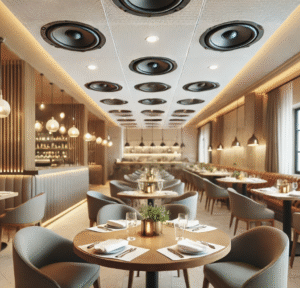
Ceiling speakers provide superior, even sound distribution while keeping the dĂŠcor clean and uncluttered. Instead of visible speakers on corners, tables, or countertops, ceiling systems integrate smoothly into the layout.

This sleek and modern approach demonstrates attention to detail and helps preserve the design of your dining room. Whether your restaurant leans rustic, minimalist, or upscale urban, ceiling speakers stay hidden yet effective — and that refinement boosts perceived value in the eyes of customers.

Smart Sound Control for Zones and Volume

With ceiling speakers, restaurant owners can adjust sound levels by zone, providing flexibility and sophistication in any layout.

Quiet bar? Louder dining section? Private event area? Outdoor patio?

Ceiling speaker systems can be programmed to tailor the sound to guest needs without disturbing experiences or compromising comfort. This creates an organized audio strategy that encourages pleasant conversations, supports dining flow, and reduces complaints about volume inconsistencies.

It’s not simply music — it’s audio intelligence applied to hospitality strategy.

Operational Benefits: Clear Communication and Efficiency

Beyond ambiance, ceiling speakers help staff work more efficiently. Announcements, paging systems, and kitchen-to-front-of-house communication become smoother and clearer. Restaurants hosting events or themed nights gain an easy channel for announcements without needing portable speakers or disruptive setups.

This ultimately supports professionalism, operational flow, and reduced confusion during peak hours. A smart sound system keeps staff connected and the guest experience uninterrupted.

Increasing Customer Satisfaction and Repeat Business

Happy diners return — and sound plays a quiet but powerful role in shaping that happiness. Research shows that pleasing, well-balanced music improves mood and increases perceived satisfaction, which leads to stronger loyalty.

By investing in ceiling speakers, restaurants create memorable environments that guests associate with comfort, quality, and good times. That emotional response drives repeat visits, referrals, and positive online reviews — all essential to long-term growth and reputation building.

A Boost to Brand Identity and Experience

Your restaurant’s brand isn’t just seen — it’s felt. With ceiling speakers, music becomes an extension of your story and personality. A modern brunch café may feature bright pop-acoustic playlists, while a luxury steakhouse could emphasize soulful jazz or classical pieces.

When guests recognize and connect with your vibe, they become emotionally invested. Ceiling speakers help shape that connection in subtle but meaningful ways.

Durability, Longevity, and Value for Money

Ceiling speakers aren’t just aesthetically superior — they offer long-term durability and reliability. Many commercial ceiling speakers and amplifiers are designed for continuous performance, built against dust, humidity, and wear in bustling environments.

Instead of frequently replacing portable speakers or dealing with inconsistent audio setups, restaurants enjoy years of stable, high-quality sound. This turns what appears to be an expense into a cost-efficient investment that pays dividends in guest satisfaction and smoother operations.

Proven Practice in the Hospitality Industry

The hospitality industry already recognizes sound as a crucial part of the dining experience. According to the National Restaurant Association, ambiance — including lighting and music — is one of the most influential factors shaping customer satisfaction in modern dining environments.

Furthermore, immersive and curated audio environments are increasingly highlighted by restaurant trend experts, such as Restaurant Business Online, which frequently covers best-in-class hospitality strategies, including sensory branding and customer experience design.

For a deeper look at how restaurants build enhanced guest experiences through design elements, including sound, the industry resource Nation’s Restaurant News offers case studies and updates on modern hospitality innovations.

Additionally, research and influence around sound environments in public spaces can be explored through the foundational background on hospitality environments found on Wikipedia, supporting the credibility of sound-focused enhancements in restaurants.

These sources reinforce a simple truth — modern restaurants that prioritize thoughtful sensory experiences tend to outperform in guest satisfaction and loyalty.

The Competitive Edge in Modern Dining

In an era of rising competition and shifting customer expectations, ceiling speakers give restaurants a powerful edge. They support ambiance, functionality, and branding in one elegant system. From local cafés to fine-dining establishments, restaurants at every level use sound to elevate their offering — and guests expect an environment that feels intentional, comfortable, and memorable.

Those who invest in quality sound systems position themselves above competitors who overlook experience-driven details.

Conclusion: Sound That Serves Success 🎧

Ceiling speakers are far more than a decorative choice — they are a strategic investment in the restaurant experience. By improving ambiance, supporting staff communication, enhancing brand identity, and driving repeat business, they become a solid long-term asset that transforms dining spaces into memorable destinations.

A restaurant isn’t just a place to eat — it’s a place to feel welcome, comfortable, and engaged. With ceiling speakers, every guest enjoys a cohesive, immersive environment that encourages them to stay longer, return often, and share their experience with others.

In the business of hospitality, creating comfort and connection is everything — and high-quality ceiling sound is one investment that pays off meal after meal.

The Hidden Ingredient to Restaurant Success: Why Every Restaurant Needs IT Support for Small Businesses 🍽️💻

Restaurant News for IT Support Small Businesses

In the restaurant world, success has always been tied to flavor, service, and atmosphere. But today, there’s another ingredient quietly shaping the industry from the inside out: technology. Whether it’s your point-of-sale system, online ordering platform, reservation software, or kitchen display screens—your restaurant runs on tech more than ever before. And just like you wouldn’t hand your kitchen over to someone who can’t cook, you shouldn’t leave your technology unmanaged.

This is where investing in IT support designed for small businesses becomes essential. Restaurants operate in a fast-paced, customer-focused environment where even a few minutes of downtime can lead to lost orders, frustrated guests, and damaged reputation. Strong IT support ensures everything runs smoothly, so you can focus on delivering exceptional dining experiences—not fighting Wi-Fi routers or malfunctioning point-of-sale terminals.

Below, we dive into why your restaurant needs professional IT support and how it keeps you running efficiently and profitably in a digital-first dining world.

Technology Is Now the Backbone of Modern Restaurants

From quick-service chains to fine-dining establishments, technology is woven into the daily operations of nearly every restaurant. According to industry insights from the National Restaurant Association, restaurant owners continue to increase investment in technology, especially around ordering, delivery, customer experience, and payment systems.

Today’s restaurant tech stack may include:

  • Point-of-sale (POS) systems

  • Online & mobile ordering platforms

  • Reservation management tools

  • Inventory control software

  • Digital menu boards

  • Security cameras & access control

  • Wi-Fi for staff and guests

  • Employee scheduling software

  • Payment terminals and digital wallets

  • Kitchen display systems

Every one of these systems needs to work effortlessly. When technology fails, so does your service. IT support ensures your digital operations flow as smoothly as your dining experience.

Minimizing Downtime = Maximizing Revenue

If your POS system crashes during lunch rush, what happens? Orders stall, mistakes multiply, and customers get frustrated—some may even walk out. Too many restaurants consider IT support “optional” until the day they’re stuck waiting on a repair that costs them hours of sales and damage to their reputation.

Professional IT support prevents downtime by:

  • Monitoring systems proactively

  • Troubleshooting issues remotely or onsite

  • Ensuring hardware and software stay updated

  • Performing scheduled maintenance

  • Responding quickly to outages

Restaurants make most of their money in peak hours. You can’t afford to lose minutes—let alone hours—to tech problems. A reliable IT support partner helps you stay open, efficient, and profitable.

Protecting Sensitive Customer & Financial Data

Restaurants handle sensitive financial information through credit card transactions and often loyalty programs. That makes them prime targets for cyber threats. Even small restaurants are not immune—hackers frequently exploit businesses with weaker security.

Cybersecurity threats include:

  • Payment card fraud

  • Phishing scams

  • Ransomware attacks

  • Data breaches of customer info

  • Unauthorized network access

IT support protects your restaurant by implementing:

  • Firewalls & encrypted systems

  • Secure payment processing

  • Multi-layer cybersecurity protection

  • Employee training on tech safety

  • Ongoing monitoring for suspicious activity

A cyber-attack doesn’t just cost money—it destroys trust. With professional IT support, you defend your business, your customers, and your brand.

Supporting Online Ordering & Delivery Platforms

Online food ordering has become a staple in the restaurant industry. According to Restaurant Business Online, digital ordering remains one of the fastest-growing channels for restaurant revenue.

When online systems fail, customers can’t place orders, drivers can’t receive instructions, and your kitchen goes from busy to silent. With IT support, you ensure:

  • Reliable connectivity to delivery platforms

  • Proper integration between systems

  • Smooth ticket routing to the kitchen

  • Minimal order errors

  • Backup solutions if one service fails

Great food doesn’t matter if customers can’t order it. IT support keeps your digital front door open.

Streamlining Operations & Efficiency

Your staff shouldn’t spend time rebooting equipment or troubleshooting printers. IT support for restaurants keeps operations smooth by:

  • Optimizing network performance

  • Ensuring tech workflows align with restaurant processes

  • Maintaining consistent Wi-Fi for guests and staff

  • Managing hardware replacements and upgrades

  • Organizing vendor and software licensing

This consistency creates a better rhythm in your restaurant—fewer delays, fewer interruptions, and more time for great hospitality.

Data-Driven Decision Making

Restaurants have access to more data than ever before—sales, peak hours, customer behavior, menu performance, inventory consumption, labor costs, and more. According to Wikipedia’s Restaurant Technology entry, modern dining relies heavily on systems that collect and analyze operational data.

With the right IT support, you can turn that information into smarter decisions like:

  • Optimizing staffing to reduce labor costs

  • Tracking the popularity of menu items

  • Preventing inventory waste

  • Identifying peak rush times

  • Personalizing customer experiences

When your tech works well, your business intelligence becomes a powerful tool—not a headache.

Compliance, Licensing, and Security Requirements

Restaurants face health regulations, food safety laws, and now—technology compliance as well. Data rules, credit card security standards, and privacy requirements are part of daily operations. IT support helps you stay compliant and avoid costly penalties or data breaches.

This includes:

  • PCI compliance

  • Secure credit card processing systems

  • Data privacy protection

  • Proper equipment disposal and data wiping

  • Compliance audits and documentation

Your restaurant works hard to maintain health standards—your digital hygiene needs the same attention.

Seamless Customer Experience in a Digital Age

Customers expect speed, accuracy, convenience, and reliability. That means your tech must work from the moment they place an order to the second they pay.

IT support ensures:

  • Faster checkouts

  • Smooth reservations and waitlist tech

  • Reliable table-side ordering devices

  • Accurate kitchen communication

  • Consistent digital menu displays

Tech should enhance hospitality—not disrupt it. IT support helps create a dining experience customers want to come back to.

A Competitive Advantage in a Crowded Market

Restaurants face intense competition. Those who adopt technology the right way gain an edge. From loyalty apps to inventory automation and digital menus, modern systems position your restaurant to win in a tech-driven dining world.

Industry publications like Nation’s Restaurant News frequently highlight how technology innovation is elevating brands and improving customer satisfaction across the foodservice industry.

With IT support, you leverage tech as a growth tool—not a frustration.

Conclusion

Technology has become a powerful ingredient in restaurant success. From online orders to payment processing, cybersecurity to digital menus, and reservations to back-of-house efficiency, your restaurant depends on reliable systems every single day.

IT support small businesses protects your operations, safeguards your customers, minimizes downtime, and positions your restaurant to thrive in an increasingly digital marketplace.

When your technology works effortlessly, your team can do what they do best—create unforgettable dining experiences and build a restaurant guests love.

Invest in IT support, and your restaurant won’t just run smoother—it will grow stronger, smarter, and more competitive. 🍴✨

The Smartest Way to Build: Why San Francisco Restaurants Need Owner’s Representation During Construction 🍽️🏗️

Restaurant News for San Francisco Owners Representation

San Francisco is a rare blend of culinary ambition, high expectations, and high complexity. Opening or renovating a restaurant here isn’t just about great food and a gorgeous dining room—it’s a gauntlet of permitting steps, design decisions, procurement puzzles, schedule risks, and budget landmines. When the stakes include prime-location rents, impatient landlords, and a team eager to get to service, mistakes are expensive and delays are brutal. That’s exactly why an Owner’s Representative (Owner’s Rep) is not a luxury but a necessity for restaurant projects in the city. Acting as your advocate from day one through opening night, an Owner’s Rep translates your vision into a coordinated plan, protects your budget and timeline, and keeps the build aligned with hospitality operations so you can open with confidence—and stay open.

What an Owner’s Representative Does (And Why Restaurants Benefit)

An Owner’s Rep is your project quarterback. They represent your interests—not the architect’s, not the contractor’s, not the landlord’s. In practice, that means setting clear scope, building a real-world budget, creating a schedule that accounts for San Francisco’s approval timelines, aligning design with operational needs, orchestrating vendors and long-lead items, and pressure-testing every assumption. For restaurant owners and operators juggling menu development, team recruiting, and pre-opening marketing, this single point of accountability keeps the entire construction effort moving in sync with the business plan. The result: fewer surprises, faster decisions, and a far better shot at opening on time without compromising your concept.

San Francisco Adds Complexity You Can’t Ignore

Every market has its quirks, but San Francisco adds a particularly dense layer of scrutiny and process. Local and state rules, evolving public-space expectations, and neighborhood sensitivities can all impact design and approvals. Meanwhile, the broader restaurant industry continues to navigate tricky real estate dynamics and development bottlenecks—scarce sites, high costs, tight inventories, and permitting delays—which compound the challenge of launching or refreshing a venue here. An Owner’s Rep brings market-specific experience and a reality check on timeframes so you’re not building your business plan on wishful dates. See how national operators are adapting to a constrained real-estate and permitting environment in industry reporting like Nation’s Restaurant News’ coverage of development bottlenecks. Nation’s Restaurant News

Permitting and Approvals: Time Is Money ⏳

Permitting delays are more than an inconvenience; they cascade into everything else—rent commencement, cash flow, seasonal openings, and staff hiring. An Owner’s Rep maps your approval pathway, sequences submissions, coordinates responses to plan-check comments, and proactively manages dependencies so your project doesn’t stall. Industry analysis highlights how permitting uncertainty can push openings back, inflate costs, and erode a project’s ROI—precisely the scenario a diligent Owner’s Rep is hired to prevent or mitigate. Restaurant Dive’s discussion of permitting headwinds captures this risk landscape and why planning for it matters. Restaurant Dive

Budget Protection: Value Engineering Without Compromising the Guest

Restaurants live and die on margin. A skilled Owner’s Rep knows where to invest (acoustics, ventilation, kitchen flow, durable finishes) and where to trim without hurting the guest experience. They pressure-test contractor bids, flag scope gaps, reconcile drawings with site realities, and model long-lead procurement to avoid price spikes. When markets are tight and schedules slip, costs climb—your advocate keeps a running ledger of decisions and their budget impacts so you can course-correct early rather than explain overruns later.

Schedule Discipline: Aligning Construction With Pre-Opening Ops

A restaurant construction schedule must integrate with hiring, training, menu testing, health inspections, and soft openings. Your Owner’s Rep builds a critical path that includes equipment commissioning, AHJ inspections, health and fire approvals, and a realistic buffer for punch-list fixes. They run weekly progress meetings, hold trades to milestones, and escalate blockers before they snowball. In a city where momentum is everything, schedule discipline is the difference between catching a peak season and missing it.

Design That Cooks: Back-of-House Flow, Ventilation, Acoustics, and Power

Beautiful dining rooms don’t save kitchens that bottleneck. An Owner’s Rep bridges the gap between design intent and operational reality: validating that line equipment has the power and make-up air it needs; confirming hood paths and roof penetrations; protecting circulation for servers; controlling reverberation so conversation feels lively, not loud; and ensuring bar and POS placements support speed. They coordinate between the architect, MEP engineers, kitchen consultant, and GC so the drawing set actually reflects how your restaurant will work at 7:15 p.m. on a Saturday.

Procurement and Long-Lead Items: Don’t Let a Part Sink Your Opening

From custom hoods to dishwashers and specialty lighting, long-lead items can quietly sabotage your opening if not ordered and tracked early. Supply chain disruption has not vanished—operators still face sporadic shortages, logistics hiccups, and material cost swings. A vigilant Owner’s Rep identifies critical items, locks orders against the schedule, and builds alternates so one delayed component doesn’t idle the entire project. Industry coverage continues to note the operational and financial pressures from supply chains, underscoring the value of proactive procurement management. NetSuite

Real Estate Reality: Fitting Your Concept to the Box 📦

San Francisco’s restaurant real estate is competitive and nuanced. Many second-generation spaces look tempting, but converting them to your concept can be trickier than it appears—structural limits, venting, grease management, ADA upgrades, and utility capacity can turn a “light remodel” into a heavy lift. An Owner’s Rep participates in site selection and lease review, scopes test-fits, estimates retrofit costs, and protects you in the work letter so you’re not inheriting hidden liabilities. Nationally, development has been complicated by low inventory and cost pressures, a context that reinforces why technical diligence up front saves time and money downstream. Nation’s Restaurant News

Labor and Operations During the Build: Plan for Training, Not Just TCO

Even as labor conditions shift, operators still juggle hiring and retention while trying to open on schedule. Construction delays can force you to onboard too early—or too late—either burning payroll or compressing training. An Owner’s Rep coordinates your operational ramp with realistic turnover dates, so culinary and front-of-house teams get the hands-on time they need with actual equipment in place. Industry reporting shows the labor picture has improved from peak shortage levels, but it’s still not “problem solved,” which makes timing and predictability on the build side that much more valuable. Restaurant Business Online

Stakeholder Management: Landlords, Neighbors, and Inspectors

Owner’s Representatives are professional communicators. They manage expectations with landlords, keep neighbors in the loop on noisy work, and coordinate with inspectors so you’re not waiting an extra week for a simple sign-off. In San Francisco’s tight-knit neighborhoods, a respectful, transparent approach during construction pays dividends in goodwill on opening day—and beyond.

Risk Management: Documentation, Contingencies, and Change Control

Restaurant projects move fast, and scope tends to creep. Your Owner’s Rep sets up change-order protocols, maintains an issue log, and tracks RFIs so design clarifications don’t become budget shocks. They insist on closeout readiness from the beginning—collecting submittals, warranties, O&M manuals, and as-builts—so that when you cut the ribbon, you also have the documentation to operate and maintain the space without drama.

How Your Owner’s Rep Drives ROI (Not Just “Cost”)

Think of your Owner’s Rep as an ROI engine. By reducing schedule slips, preventing rework, right-sizing value engineering, and preserving your brand experience, they protect revenue and margin that far outweigh their fee. They also de-risk decisions so you can focus on what makes your concept special—menu innovation, hospitality culture, and marketing momentum—while they translate that vision into a build that performs.

Curated Industry Reading for Restaurant Owners

If you want to dig deeper into the trends that affect construction and openings, these timely pieces are useful context:

Choosing the Right Owner’s Rep in San Francisco ✅

When you evaluate candidates, look for hospitality-specific experience and recent San Francisco projects. Ask for detailed project plans and sample risk registers. Ensure they can speak fluently with architects and engineers, but also think like an operator—understanding ticket times, line of sight for service, expo ergonomics, and acoustic comfort. Insist on references from chefs or GMs who can attest to how the build supported opening week performance, not just the punch list.

Conclusion

In San Francisco’s high-stakes dining scene, the difference between an on-time, on-brand opening and a costly, morale-draining slog is often the presence of a strong Owner’s Representative. They anticipate permitting hurdles, enforce schedule discipline, safeguard your budget, coordinate complex technical designs, and keep the whole team aligned on what matters most: delivering a guest experience that earns repeat visits from day one. If you want your kitchen to hum, your bar to fly, your acoustics to invite conversation, and your opening to land on the calendar you promised investors and staff, hire a San Francisco Owners Representation. It’s the smartest insurance you can buy against the very real risks of restaurant construction in San Francisco—and the surest way to turn your concept into a beloved neighborhood dining room.

🌳 When Roots Run Deep: Why a Memphis Restaurant Would Need a Tree Expert Witness

Restaurant News for Tree Expert Witness Memphis

Running a successful restaurant in Memphis isn’t just about delicious food and Southern hospitality. Location, safety, legal responsibility, property value, and public perception play a powerful role in long-term success. One often-overlooked factor that ties all of these together is the presence of trees. Beautiful oaks, magnolias, and crepe myrtles are part of the Memphis charm — but when something goes wrong, they can also become the center of expensive legal disputes.

That’s where a Tree Expert Witness (Certified Arborist & Consultant) becomes essential.

A Tree Expert Witness provides professional, science-based insight during legal or insurance cases involving trees — from property damage and safety hazards to wrongful removal, personal injury, and city ordinance violations. For a Memphis restaurant, this expertise can be the difference between winning a lawsuit… or losing everything.

Let’s explore why every Memphis restaurant should understand the value of a Tree Expert Witness and how it could protect their business, reputation, and bottom line. 🌟


The Hidden Risks Trees Create for Restaurants

Trees add shade, elegance, and curb appeal — especially in restaurant patios, outdoor seating areas, or scenic entrances. But without proper evaluation and documentation, they can also create major liability risks.

Common tree-related restaurant problems include:

  • Branches falling on customers or vehicles

  • Uplifted sidewalks causing trip hazards

  • Tree roots damaging plumbing or foundations

  • Storm-damaged trees creating dangerous conditions

  • Disputes with neighboring property owners

  • City violations for improper pruning or removal

  • Landscaping contractors making costly mistakes

When these issues turn into claims or lawsuits, opinions and guesses won’t hold up in court. A Tree Expert Witness provides scientific evidence and expert testimony that a judge or jury can trust.


Legal Liability: Restaurants Can Be Sued Over Trees

If a tree or branch injures someone on restaurant property, the business may be held responsible — even if they didn’t know the tree was dangerous.

In legal cases, the question often becomes:
Did the restaurant act responsibly in maintaining the tree?

A Tree Expert Witness can:

  • Evaluate the tree’s health before and after an incident

  • Determine whether the hazard was foreseeable

  • Review maintenance practices and city guidelines

  • Testify on what a “reasonable” property owner should have done

  • Help prove responsibility — or protect the restaurant from blame

Restaurants can also be sued by neighbors if roots or branches cause damage to surrounding properties. A Tree Expert Witness offers clarity and neutrality, helping resolve disputes before they spiral out of control.


Insurance Claims and Coverage Disputes

When a tree falls or causes damage, insurance companies often look for reasons to deny or reduce claims. They may argue the restaurant neglected maintenance or that the tree failure was preventable.

A Tree Expert Witness can support the restaurant by:

  • Determining the true cause of the tree failure

  • Differentiating between storm damage and neglect

  • Providing expert reports for insurance adjusters

  • Ensuring proper compensation for repairs or business interruption

Without expert testimony, a restaurant may face thousands in unrecoverable losses.


Outdoor Dining and Customer Safety

Outdoor dining is a Memphis favorite — especially in Midtown, Downtown, and historic districts. But more outdoor spaces mean more exposure to trees.

Falling limbs, slippery leaves, root damage under pavers — these risks can lead to injury claims or ADA violations. A Tree Expert Witness can assess whether a tree is safe, stable, and properly pruned.

They can recommend:

  • Hazard mitigation

  • Pruning strategies

  • Tree protection plans

  • Documentation to prove responsible care

This proactive approach protects guests and shields the restaurant from legal exposure. ✅


Historic Trees, City Ordinances, and Permits

Memphis has strict regulations for tree removal and construction near tree roots — especially on commercial properties. Violating these rules can lead to hefty fines, delays, or forced replanting.

A Tree Expert Witness understands:

  • Local Memphis tree laws

  • Protected species rules

  • Construction impact on tree roots

  • Mitigation requirements

If a restaurant plans renovations, patio expansions, or parking lot updates, a Tree Expert Witness can guide the process legally and safely — or testify on the restaurant’s behalf if accused of violating ordinances.


When Neighbor Disputes Turn Into Legal Battles

Restaurants often sit near residential or commercial neighbors. Trees along property lines can cause boundary disputes when branches hang over, roots invade, or leaves clog drains.

If a neighbor claims damage — or illegally cuts part of the restaurant’s tree — things can escalate fast. 😬

A Tree Expert Witness can:

  • Determine property boundaries regarding tree ownership

  • Calculate tree value using industry standards

  • Assess damage and recommend restitution

  • Provide unbiased testimony in court

This ensures accurate, fair outcomes — not emotional or exaggerated claims.


Protecting the Restaurant’s Brand and Reputation

Memphis residents care about the environment. Unethical tree removal or visible tree damage can spark backlash, negative reviews, or media attention. One viral photo of a damaged live oak could hurt business more than you think.

A Tree Expert Witness helps maintain a restaurant’s reputation by ensuring:

  • Responsible tree management

  • Proper documentation of care

  • Environmentally sound decisions

  • Transparent communication with the city and public

In a world where image matters, protecting natural surroundings builds trust with customers. 🌿


Expert Guidance During Development or Expansion

Many restaurants add patios, drive-thrus, or event spaces to grow revenue. During expansion, trees might need to be protected, transplanted, or carefully worked around.

A Tree Expert Witness can create a Tree Protection Plan that considers:

  • Soil health

  • Root systems

  • Structural support

  • Equipment access routes

  • Long-term health risks

With expert planning, restaurants avoid costly delays, fines, or tree-related lawsuits during construction.


Calculating the Monetary Value of Trees

Most people don’t realize: Trees have legal monetary value.
If a contractor, storm, or vehicle damages a tree, the restaurant may be owed financial compensation — but only if the value is properly assessed.

Tree Expert Witnesses use industry-standard formulas to determine:

  • Aesthetic value

  • Shade and energy savings

  • Property value contribution

  • Environmental value (stormwater, air quality)

  • Loss of business impact

This can lead to significant reimbursement in legal or insurance cases.


When Injury Happens — Expert Witnesses Win Cases

If a person is injured on restaurant property due to a tree, an attorney will almost always bring in an expert witness. Restaurants that rely on guesswork or landscaper opinions don’t stand a chance in court against scientific evidence.

A Tree Expert Witness brings credibility with qualifications such as:

  • Certified Arborist (ISA)

  • Tree Risk Assessment Qualified (TRAQ)

  • Expert witness experience in multiple legal cases

  • Understanding of Memphis climate and species

  • Ability to testify under oath

Their testimony is often the deciding factor in whether a restaurant wins or loses the case.


Real-World Examples in the Restaurant Industry

  • A large branch falls on outdoor diners — injury lawsuit

  • A dying tree damages the roof — insurance firestorm

  • A neighbor sues over root damage from restaurant landscaping

  • City issues fines for improper tree pruning

  • Contractor accidentally kills a historic tree — public outrage

  • Patio construction violates tree protection rules

  • Customer trips over raised sidewalk from roots — liability claim

All of these situations REQUIRED a Tree Expert Witness to resolve correctly.

Restaurants that prepare ahead of time are always in a stronger position.


The Importance of Safety and Legal Preparedness

The restaurant industry understands that safety, regulation, and reputation matter. Reputable sources regularly discuss risk management and liability:

These trusted resources consistently show how operational risks — including property maintenance and legal responsibility — are vital to restaurant success.


Conclusion: A Tree Expert Witness Is Not Optional — It’s Protection

In Memphis, trees are part of the landscape, charm, and customer experience. But they also carry legal, financial, and safety risks that restaurants cannot ignore.

A Tree Expert Witness Memphis is more than a consultant. They are:

✅ A legal shield
✅ A scientific authority
✅ A risk manager
✅ An insurance advocate
✅ A reputation protector
✅ A strategic partner

Whether you’re dealing with a lawsuit, planning an expansion, protecting outdoor diners, or simply avoiding expensive mistakes, having a Tree Expert Witness on your side gives you clarity, credibility, and confidence.

In today’s world, smart restaurant owners don’t wait for disaster — they prepare.
And in Memphis, where trees meet hospitality, the smartest move a restaurant can make is bringing in a Tree Expert Witness before it’s too late. 🌳🍽️💼