
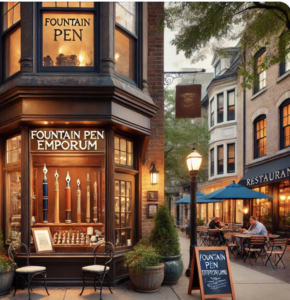
A fountain pen shop is built on the art of slowing down. People step inside to feel paper texture, test nibs, compare inks under warm light, and enjoy the small luxury of choosing something personal. A restaurant next door is built on the same human truth: people gather, linger, and treat themselves. When these two businesses sit side-by-side, the relationship becomes more than convenient real estate. It becomes a shared ecosystem where timing, mood, and experience work together to create more visits, longer dwell time, stronger community presence, and better sales for the pen shop.
Placing a fountain pen shop next to a restaurant blends two “destination” experiences into one outing. The pen shop benefits from the restaurant’s steady stream of guests, while the restaurant benefits from an adjacent retail experience that feels elevated and memorable. Together, they turn a simple errand into a mini event, and that shift is where the magic happens. ✨
Built-In Foot Traffic That Feels Natural, Not Forced 🚶♀️🚶♂️
Restaurants produce reliable waves of traffic across lunch, dinner, and weekend peaks. That rhythm is valuable because a specialty retail store does not always generate constant walk-ins on its own. A fountain pen shop thrives when people have time to browse, and restaurant visits often include arrival gaps, waiting lists, and post-meal strolling. Those “in-between” moments become perfect windows for discovery.
Being next door places the pen shop directly in the path of guests who are already in a spending mindset. Dining out is discretionary, experiential, and emotionally driven. The guest has already decided that today is worth a little extra, and that mindset translates beautifully to a pen purchase, ink bottle, notebook, or gift card. That kind of adjacent traffic is especially powerful when it comes from the kind of diners who pay attention to craftsmanship and detail, a core overlap with fountain pen buyers. Industry coverage frequently emphasizes how restaurants compete on experience and differentiation, and that experience-driven consumer behavior carries into nearby retail. Nation’s Restaurant News often frames the modern restaurant landscape around experience, consumer preferences, and brand identity.
A Longer, Happier Dwell Time That Boosts Browsing ⏳🙂
Fountain pen shopping is rarely a five-minute sprint. People want to test lines, compare nib widths, sample inks, and talk through use cases. Restaurant adjacency naturally increases dwell time in the neighborhood. Guests arrive early for reservations, wait for tables, or linger after dessert. That slow, relaxed tempo is exactly what a pen shop wants, because browsing is where attachments form and higher-value purchases happen.
The emotional arc matters, too. A good meal leaves people content, unhurried, and open to small indulgences. That post-meal glow can turn a casual walk-in into a meaningful purchase, especially with items that feel celebratory: a first “real” fountain pen, a new journal for the new year, or a special ink that matches a personal aesthetic. Restaurant industry reporting often highlights how value is not only about price, but also about the feeling guests get from the experience. Restaurant Business regularly covers how restaurants signal value and build loyalty through experience, which is the same psychological terrain that supports specialty retail add-ons next door.
Shared “Occasion Energy” Creates More Gift Sales 🎁✨
Restaurants are magnets for occasions: birthdays, anniversaries, promotions, first dates, reunions, and client dinners. Those occasions create last-minute gift needs, and fountain pens are unusually well suited for meaningful gifting. A pen is practical, personal, and symbolic. It says celebration, commitment, and taste without needing to be loud.
When a fountain pen shop is next to a restaurant, it becomes an easy add-on for the guest who wants to elevate the moment. A person can pick up a pen and have it wrapped before dinner, or walk in after the meal and choose a gift that matches the emotional tone of the evening. That proximity reduces friction and increases conversion because the guest is already present, already spending, and already thinking in “special moment” terms. Restaurant-focused journalism frequently notes how dining occasions drive ancillary purchases and brand attachment. Restaurant Dive covers how consumer trends shape restaurant behaviors and spending patterns, and those patterns spill over into nearby retail.
Cross-Promotions That Feel Premium Instead of Pushy 🤝🍝
A fountain pen shop and a restaurant can collaborate in ways that feel classy and natural. Simple partnerships can drive measurable results without cheapening either brand:
-
A dinner receipt that offers a small perk at the pen shop, such as a complimentary ink sample card with any purchase.
-
A pen shop card that offers a dessert add-on or coffee upgrade at the restaurant.
-
A monthly “Write Night” where guests enjoy a fixed-price menu next door and then attend a handwriting or journaling mini-session at the shop.
-
A special edition menu insert featuring handwritten notes and the story behind the ink used.
These collaborations work best when they are framed as hospitality rather than discounts. The restaurant gives a taste of generosity; the pen shop gives a sense of artistry. Both businesses win by creating a shared destination identity that feels curated. Coverage of branding and marketing in the restaurant world often stresses how partnerships and storytelling deepen loyalty. QSR Magazine frequently explores how concepts build repeat traffic through brand experience and marketing, and those principles apply strongly to local collaborations too.
A Neighborhood Becomes a “Third Place” for Conversation and Community 🏙️🖋️
Fountain pen culture thrives on community: collectors comparing nib grinds, beginners learning ink properties, and journalers talking paper weight. Restaurants also thrive on community: regulars, staff relationships, and familiar routines. Together, they can turn a block into a beloved micro-district, a place people return to because it feels like them.
When the pen shop is adjacent to a restaurant, it becomes easier to host events that stick. People can make an evening out of it, and attendance rises when the outing includes food. That matters because events are not only marketing; they create belonging, and belonging creates loyalty. A pen shop with a strong community tends to see higher repeat visits and more word-of-mouth referrals, and the restaurant adjacency makes community-building far easier.
From a broader perspective, restaurants are central to the identity of what many people call a “restaurant” experience, and the classic definition itself emphasizes public gathering and service. Wikipedia’s article on restaurants provides that baseline context, and it helps highlight why restaurant-adjacent retail can flourish: restaurants exist to host people, and hosted people explore.
Better Timing Windows Across the Day, Not Just One Rush 🕰️🍜
A fountain pen shop can leverage restaurant-driven patterns across multiple dayparts:
-
Lunch traffic brings professionals, students, and people on errands.
-
Dinner traffic brings couples, families, and celebratory groups.
-
Weekend brunch traffic brings browsers with time and curiosity.
This diversity matters because fountain pens sell across life stages and purposes: business signing, note-taking, journaling, creative writing, sketching, and collecting. A restaurant next door brings a wider range of customer profiles into the immediate area, increasing the odds of new-market discovery. Industry coverage of quick-service, fast casual, and full-service trends shows how restaurants evolve to match daypart needs, and that daypart energy supports neighboring businesses. QSR Media is one example of an outlet that covers restaurant industry movement across formats and consumer habits.
A Stronger Local Identity That Makes Both Businesses More Memorable 🌿🏷️
A fountain pen shop next to a restaurant creates a story people repeat. It becomes “that little place where we ate and then picked out the prettiest ink” or “the date night where we found the perfect pen.” That memory is powerful because it turns a location into a ritual.
Ritual is marketing that does not expire. It brings people back. It increases recommendations. It makes tourists remember the block. It gives locals a reason to bring out-of-town guests. When a pen shop and a restaurant coordinate even lightly on aesthetics, signage, and event calendars, the neighborhood feels intentional, and intentional places attract return visits.
Restaurant journalism repeatedly underscores how competition is intense and differentiation matters, and the same is true for specialty retail. Pairing two complementary experiences strengthens differentiation for both. Nation’s Restaurant News and similar outlets focus heavily on what makes brands stand out, and that lens applies beautifully at the local level.
Conclusion: A Shared Experience Converts Better Than a Standalone Destination 🖊️🍽️✨
A fountain pen shop near me located next to a restaurant benefits from more than foot traffic. It benefits from timing, emotion, dwell time, occasions, and the natural human desire to make an outing feel complete. The restaurant brings people who are ready to enjoy themselves; the pen shop gives those people a chance to take something meaningful home. Together, they create a small district of pleasure and craftsmanship where the experience is the product.
When ink and appetite live side-by-side, the result is a neighborhood that feels slower, richer, and more memorable. That is exactly the kind of environment where a fountain pen shop can grow from a niche retail space into a local landmark. ✒️💛