
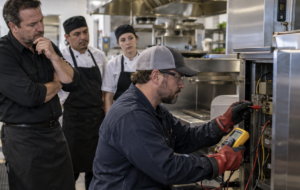
Oklahoma’s restaurant industry depends on far more than good food, friendly service, and a welcoming dining room. Behind every successful restaurant is a complicated network of electrical equipment, kitchen appliances, refrigeration systems, lighting, ventilation, point-of-sale technology, and utility connections that must operate reliably every day. In Woodward and throughout northwestern Oklahoma, electrical safety is an important part of keeping these businesses operating smoothly.
For restaurant owners, managers, contractors, maintenance companies, and other Oklahoma businesses, dielectric testing may not receive the same attention as food safety inspections or kitchen maintenance. Yet it plays an important role in identifying weaknesses in electrical insulation and determining whether certain equipment can safely withstand the electrical conditions for which it was designed.
That makes dielectric testing relevant well beyond the electrical industry. Restaurants, commercial kitchens, food-service facilities, hotels, institutional kitchens, warehouses, suppliers, and other businesses rely heavily on electrical systems. When those systems are dependable, employees can work more safely, equipment can operate as intended, and businesses have a better chance of avoiding disruptive electrical problems.
Electrical Safety Has Become Part of the Bigger Restaurant Safety Picture
Restaurant safety is often discussed in terms of food temperatures, sanitation, handwashing, fire prevention, and employee training. Those areas are essential, but modern restaurant operations are also increasingly dependent on electrical infrastructure.
Commercial kitchens may contain electric ovens, fryers, warming equipment, freezers, refrigerators, ice machines, dishwashing systems, exhaust equipment, mixers, food processors, lighting systems, computers, charging equipment, and electronic ordering systems. Even restaurants that primarily cook with natural gas still depend heavily on electricity.
The Oklahoma Restaurant Association represents an industry built around food service, hospitality, training, education, and responsible business operations throughout the state. As restaurants adopt more sophisticated technology, maintaining the systems that support daily operations becomes increasingly important.
Electrical insulation is one part of that picture. Insulation helps prevent electrical current from traveling where it should not go. Over time, equipment may be affected by heat, moisture, contamination, physical wear, vibration, age, or environmental conditions. Testing can help determine whether insulating materials and components continue to provide the protection expected of them.
What Dielectric Testing Actually Measures
Dielectric testing is an electrical safety procedure used to evaluate the ability of insulating materials or equipment to withstand electrical stress. A controlled voltage is applied under defined conditions to determine whether insulation performs within acceptable limits.
The concept is sometimes associated with a dielectric withstand test, also known in many electrical applications as a high-potential or hipot test. Wikipedia’s overview of dielectric withstand testing describes it as a method used to determine the effectiveness of electrical insulation and whether equipment can safely withstand specified electrical conditions.
For businesses seeking professional Dielectric Testing Woodward, OK, the value of the service is rooted in prevention and verification. Testing can reveal insulation weaknesses that may not be visible during a routine visual inspection.
A cable, protective device, electrical component, insulating tool, or piece of equipment can look perfectly normal on the outside while deterioration is developing internally. Electrical testing provides information that appearance alone cannot always provide.
Why Woodward Businesses Have Good Reason to Pay Attention
Woodward serves as an important commercial center for northwestern Oklahoma. Restaurants and other businesses in the area support residents, travelers, agricultural operations, energy workers, contractors, transportation companies, and surrounding rural communities.
Keeping commercial facilities operating reliably matters because unexpected electrical problems can quickly affect an entire business.
A restaurant experiencing an electrical failure may lose refrigeration, lighting, ventilation, cooking equipment, internet connectivity, ordering systems, or point-of-sale capabilities. In some circumstances, an interruption can force the business to stop serving customers until repairs are completed.
The connection between equipment reliability and restaurant safety is also reflected in guidance from the U.S. Food and Drug Administration’s Food Code. The Food Code serves as a model for food-service and retail food safety requirements across the country and addresses the equipment, facilities, and operational practices necessary to support safe food service.
Reliable infrastructure supports those goals. Refrigeration must maintain safe temperatures. Hot-holding equipment must operate correctly. Dishwashing and sanitation equipment must function consistently. Ventilation systems must remain dependable. Electrical problems can therefore create consequences that extend well beyond the electrical panel.
Preventive Testing Can Help Find Problems Before Failure
One of the strongest arguments for dielectric testing is that it supports preventive maintenance rather than reactive repair.
Waiting until electrical insulation fails can be costly. A failure may damage equipment, interrupt operations, create a safety concern, or require emergency service. Testing gives organizations an opportunity to identify certain weaknesses before they develop into larger problems.
This preventive approach is consistent with broader workplace safety practices promoted by the Occupational Safety and Health Administration. OSHA requirements for certain electrical protective equipment include periodic electrical testing designed to determine whether insulating equipment can withstand the voltages involved.
Not every piece of restaurant equipment falls under the same testing requirement, and electrical work should always be evaluated according to the equipment involved, the applicable standards, manufacturer recommendations, and the conditions of the workplace. The larger principle remains important: electrical insulation should be treated as a safety component rather than something that can simply be assumed to remain effective indefinitely.
Commercial Kitchens Place Heavy Demands on Equipment
Restaurant kitchens are demanding environments.
Heat, steam, grease, cleaning chemicals, water, constant equipment use, and repeated temperature changes can create challenging conditions for electrical components. Equipment may operate for many hours every day, particularly in busy restaurants with breakfast, lunch, dinner, catering, or late-night service.
Moisture deserves particular attention because water and electricity are a dangerous combination. Restaurants routinely use water for cooking, cleaning, dishwashing, food preparation, beverage service, and sanitation. Proper equipment design, grounding, maintenance, insulation, and employee procedures all contribute to reducing electrical hazards.
The National Fire Protection Association maintains standards related to commercial cooking operations, including safety considerations for cooking equipment, ventilation systems, fire protection, and power sources. These standards illustrate just how many interconnected systems are involved in maintaining a safe commercial kitchen.
Dielectric testing fits into the broader preventive mindset that responsible facility operators already apply to exhaust systems, fire suppression equipment, refrigeration, plumbing, cooking appliances, and other critical infrastructure.
Restaurant Safety Depends on Systems Working Together
Food safety receives significant attention in restaurants for good reason. The Centers for Disease Control and Prevention provides extensive guidance for restaurant managers and employees covering safe food preparation, employee practices, illness prevention, and food-safety culture.
Those protections depend partly on functioning equipment.
Refrigerators must remain cold enough to protect perishable food. Cooking equipment must reach proper temperatures. Handwashing facilities need dependable water systems. Dishwashing equipment must function properly. Ventilation affects working conditions. Lighting allows employees to clean, inspect, prepare, and serve food safely.
This is why restaurant maintenance should be viewed as an interconnected system rather than a collection of unrelated repairs.
A well-maintained facility supports employees, customers, food safety practices, and business continuity at the same time.
Electrical Reliability Can Protect Business Continuity
Restaurant margins can be tight, and unexpected closures can create financial problems quickly. Lost sales are only one part of the cost.
An electrical incident may also lead to spoiled inventory, emergency repair expenses, equipment replacement, employee downtime, canceled reservations, disrupted catering orders, and reputational damage.
Preventive maintenance cannot eliminate every possible equipment failure, but it can reduce uncertainty.
Testing electrical insulation and protective equipment when appropriate allows maintenance teams to gather useful information about equipment condition. That information can help businesses make informed decisions about repairs, replacement schedules, and continued equipment use.
The same philosophy is commonly used throughout commercial facility management. Businesses inspect fire extinguishers before they are needed, service HVAC systems before peak weather seasons, clean ventilation systems before dangerous buildup develops, and maintain refrigeration before a compressor failure threatens thousands of dollars in inventory.
Electrical testing belongs in that same conversation.
Safety Culture Goes Beyond Meeting Minimum Requirements
A strong restaurant safety culture is not created by completing a checklist once a year. It develops when owners and managers consistently treat safety as part of normal operations.
The CDC has emphasized that leadership, management commitment, employee commitment, and adequate resources all contribute to a restaurant’s food-safety culture. Those same principles can be applied to facility and electrical safety.
Managers who maintain equipment, document service, address warning signs promptly, and use qualified professionals create an environment where prevention becomes standard practice.
Employees should also be encouraged to report unusual equipment behavior. Warning signs such as repeated breaker trips, unexplained shutdowns, damaged cords, unusual odors, heat around electrical components, visible deterioration, or equipment behaving unpredictably should never become accepted as normal.
These signs do not automatically indicate insulation failure, but they justify professional evaluation.
Qualified Electrical Testing Matters
Dielectric testing involves intentionally applying electrical stress to equipment or insulation. It is not an improvised maintenance procedure.
Testing should be conducted using appropriate equipment, established procedures, and personnel who understand the electrical hazards involved.
OSHA’s electrical safety guidance emphasizes the importance of qualified personnel and appropriate test equipment when evaluating circuits and electrical components. The agency’s rules concerning electrical work practices are available through its electrical safety standards.
Professional testing also creates useful documentation. Depending on the equipment and service performed, records can help facility managers track testing dates, results, maintenance history, and future service needs.
For restaurants with multiple locations or substantial commercial equipment, organized documentation can make long-term maintenance planning considerably easier.
Oklahoma Restaurant News Includes the Infrastructure Behind the Industry
Restaurant news is not limited to new menu items, grand openings, chef announcements, or dining trends. The infrastructure behind Oklahoma’s hospitality industry deserves attention as well.
Food-service businesses are increasingly technology-dependent operations. A modern restaurant may rely on dozens of electrical systems before the first customer walks through the door.
Electrical reliability affects food storage, cooking, cleaning, employee working conditions, customer comfort, security, payment processing, communications, and day-to-day productivity.
The newest FDA Food Code continues the broader national emphasis on creating safer and more consistent food-service environments. Restaurant operators who extend that same preventive philosophy to the physical systems supporting their kitchens can build stronger operations from the ground up.
That makes dielectric testing relevant to restaurant owners even when the testing itself takes place behind the scenes.
Conclusion
Dielectric testing rarely receives the public attention given to restaurant inspections, kitchen cleanliness, food quality, or customer service, but electrical insulation and equipment reliability are part of the foundation that allows restaurants to operate safely and consistently.
For businesses in Woodward, preventive electrical testing can provide valuable information about the condition of insulating equipment and electrical components before certain problems become visible or disruptive.
Restaurants depend on electricity for refrigeration, cooking, ventilation, sanitation, lighting, communications, security, and payment systems. Protecting those systems supports more than maintenance. It supports employees, customers, food safety, operational continuity, and the long-term health of the business.
For Oklahoma Restaurant News readers, the lesson is straightforward. Some of the most important safety measures in a restaurant are the ones customers never see. Dielectric testing is one of those behind-the-scenes practices that can help businesses protect the electrical infrastructure they depend on every day. ⚡